
Have you ever felt that a sound in your mix is too bright or takes up more space than it should? Recordings also often include unwanted low frequencies or extra noise that can make the whole mix feel messy. A simple tool can help fix these issues: the low-pass filter. It reduces unnecessary high frequencies and helps sounds fit better together. You can use it on many types of audio. In this guide, we’ll look at how it works and how to use it in a practical way.
Table of Contents:
Low-Pass Filter vs High-Pass Filter
Practical Uses of a low pass filter
What is a low-pass filter?
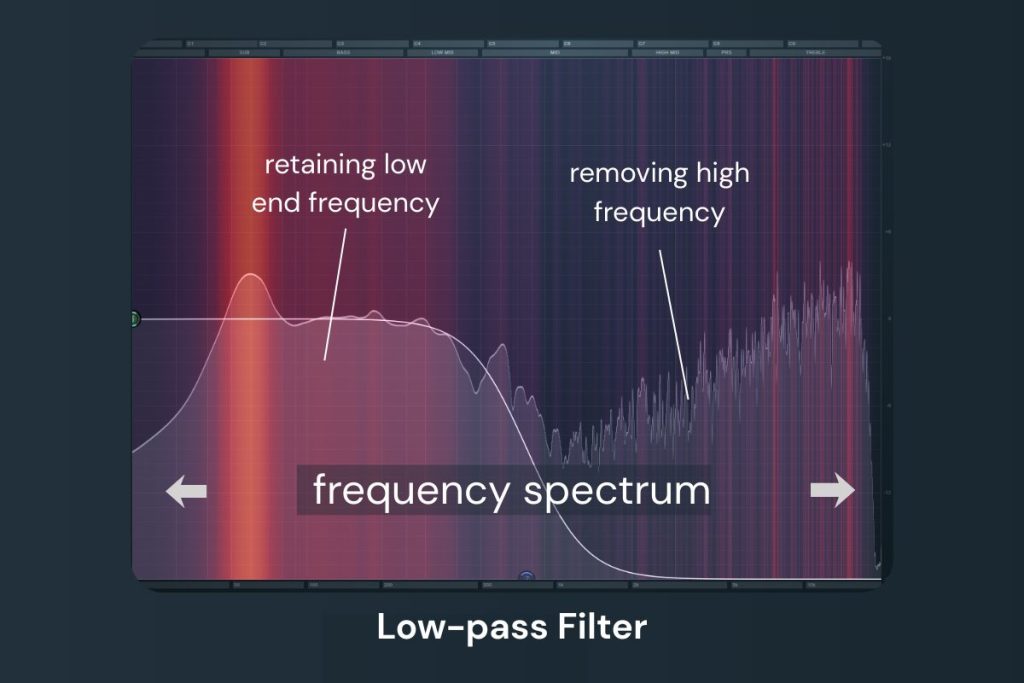
A low-pass filter is an audio tool that lets low frequencies pass through while reducing the higher ones. Think of it as a gentle way to remove brightness or harsh tones from a sound. You choose a cutoff point, and everything above that point becomes softer or is removed. This helps clean up recordings, smooth sharp edges, and control the space a sound takes in a mix. Low-pass filters are used on vocals, instruments, synths, and even effects. They are easy to use and can quickly make a mix sound more balanced and controlled.
Low-Pass Filter vs High-Pass Filter
Low-pass filters and high-pass filters do opposite jobs, but both help control the frequency balance of a mix. Here are the four most important differences:
1. What they allow through
- A low-pass filter lets low frequencies pass and reduces high frequencies.
- A high-pass filter lets high frequencies pass and reduces low frequencies.
This is the core difference between the two.
2. When they are used
- Use a low-pass filter when a sound is too bright, sharp, or has unwanted high-end noise.
- Use a high-pass filter when a sound has rumble, boominess, or low-end that it doesn’t need.
3. How they affect space in the mix
- A low-pass filter can make a sound sit further back by softening its highs.
- A high-pass filter can make a sound lighter and clearer by removing low frequencies that mask other instruments.
4. Typical use cases
- Low-pass filters are common on pads, synths, background sounds, and noisy recordings.
- High-pass filters are common on vocals, guitars, pianos, percussion, and anything that doesn’t need deep bass.
Practical Uses of a low pass filter
Low-pass filters are useful in many mixing situations because they help remove unnecessary high frequencies and shape the tone of a sound. Here are some simple and practical ways to use them.
1. Cleaning Bright or Harsh Sounds
Some recordings, especially digital ones, can sound too sharp. A low-pass filter helps soften these harsh edges.
2. Making Background Sounds Sit Better
Not every sound needs to be bright. Background elements often work better when they have fewer high frequencies.
Example: Pads, soft keys, or ambient textures can be low-passed so they sit behind vocals or lead instruments. This keeps the focus on the important parts of the mix.
3. Shaping Reverb and Delay Effects
Effects often carry unwanted high-end noise. This can clutter the mix and clash with the original sound.
Example: Adding a low-pass filter to a reverb return can make the reverb feel darker and cleaner. This prevents it from covering the vocal or lead sound.
4. Reducing noise on field recordings
Room tone, environmental sounds, and certain microphones can pick up hiss or extra high-end noise.
Example: A low-pass filter can remove this noise and make the recording feel smoother without changing the main content.
5. Creative Filter Movement
Low-pass filters are great for creating movement or transitions.
Example: Automating the cutoff to slowly open during a build-up creates tension. Closing it during a breakdown makes the mix feel more controlled and focused.
Mistakes to avoid
1. Cutting Too Much High-End
One of the most common mistakes is lowering the cutoff too far. This can make instruments sound dull or lifeless. A low-pass filter should clean up a sound, not remove all its brightness. Always compare before and after to avoid over-filtering.
2. Using Low-Pass Filters on Everything
Not every track needs a low-pass filter. Some sounds—like vocals, cymbals, and lead instruments—need high frequencies to stay clear. Using a low-pass filter on every channel can make the entire mix feel dark and flat.
3. Ignoring the Mix Context
A sound might feel too bright when soloed, but it may fit perfectly in the full mix. Many musicians filter based on solo listening, which leads to unnecessary cuts. Always adjust the low-pass filter while listening to the whole track.
4. Not Using Gentle Slopes
Using a steep slope (like 24 dB per octave) can create an unnatural cutoff and make the tone change suddenly. Gentle slopes (6–12 dB) often work better for musical instruments because they sound smoother and more natural.
Frequently Asked Questions
Can a low pass filter improve sound quality?
Yes, it can. A low-pass filter removes unwanted high frequencies like hiss, harshness, or noise. This makes the sound cleaner and helps it fit better in the mix. It doesn’t add quality, but it improves clarity by removing what you don’t need.
What is the function of a low pass filter?
A low-pass filter retains low frequencies while reducing high frequencies. It helps control brightness, shape the tone, and clean up recordings. You can use it on instruments, vocals, effects, or background sounds.
What is a high pass and low pass filter in audio?
A low-pass filter (LPF) keeps low frequencies and cuts high frequencies. A high-pass filter (HPF) keeps high frequencies and cuts low frequencies. They are both used to remove unwanted frequencies and make space in a mix.
What happens if LPF is too high?
If the cutoff is too high, the filter barely affects the sound. It won’t reduce any harshness or noise, and the mix may still feel crowded. For the filter to be useful, the cutoff needs to be low enough to remove unnecessary highs without dulling the sound.
Conclusion
Working with low-pass filters becomes easier once you understand how they react to different sounds. The more you experiment, the better you’ll recognize when a track needs subtle shaping or when it’s best left untouched. Trust your ears, keep your moves simple, and use this tool as part of a thoughtful mixing process.