
Anyone who has spent time listening to older tracks knows the small surprises that appear when comparing them with their remastered versions. Sometimes the song feels clearer, sometimes the vocals stand out with a new shine, and sometimes the entire mix feels like it has finally learned how to breathe. That shift in the listening experience is what people try to understand when they search for what a remastered song actually means.
In simple terms, remastering is the process of taking an old recording and refining its sound using better tools, cleaner technology, and a fresh set of ears. It is not a remake. It is more like restoring a photograph where the details were always there but needed the right treatment to come alive.
Know more about Audio Remastering>> Audio Remastering: What It Is and How to Do It?
Table of Contents
Why the Need to Remaster Old Songs
How a Remastered Song Sounds Different: The Main Improvements
‘Remastering Fixes Bad Singing.’ Really?
Do Remastered Versions Change the Original Song?
Should Independent Artists Remaster Their Old Songs?
Why Remastered Songs Sometimes Sound Worse
What Makes a Good Remaster? The Checklist Everyone Should Know
How AI Tools Are Changing the Remastering Process
Why the Need to Remaster Old Songs
Anyone who has worked with older mixes quickly notices how the age of a recording begins to show. A song that once felt lively can start sounding dull when played on modern speakers or streaming apps like Spotify, Apple Music, or YouTube Music. Remastering steps in to update these recordings so they feel natural in today’s listening world without rewriting what made them special. Read More.
Outdated Mixes That Struggle on Modern Devices
Many songs from past decades were shaped for cassette players, FM radio, or early CD systems. When those same mixes are heard on AirPods, studio monitors, or even a car stereo, the vocals may feel buried and instruments blend into each other. Remastering helps rebuild the clarity so every layer becomes easier to follow, even on small phone speakers.
Noise, Hiss, and Mechanical Artifacts in Old Recordings
Anyone who has opened old multitrack sessions knows the familiar tape hiss, low hum, or random clicks that come from aging equipment. These flaws become far more noticeable on clean modern devices. A remastered audio version uses careful restoration to smooth out these issues so the song feels cleaner without losing its texture.
Weak Low End That Was Never Designed for Today’s Bass-Heavy Listening
Older mixes often held back the bass because vinyl needles, early CD players, and small home systems could not handle stronger low frequencies. But today listeners expect a fuller bottom end on Spotify or YouTube Music. A remaster helps restore that missing weight so the kick and bass feel present without overpowering the original mix.
Low Volume That Falls Behind Modern Playlists
Listeners often switch between old and new songs in the same playlist, and older tracks drop in loudness right away. This happens because past mastering standards aimed for safer levels. Updating the loudness in a remaster helps these songs sit comfortably next to modern releases without feeling weak or distant.
Preparing the Music for Today’s Streaming Standards
Platforms like Spotify, Apple Music, Tidal, and Amazon Music each follow their own loudness and clarity rules. Older tracks were never shaped for these environments, which is why they sometimes sound thin or unbalanced. A remastered version adjusts the audio to match current expectations, helping the song sound intentional rather than outdated. Read More.
How a Remastered Song Sounds Different: The Main Improvements
The moment you place an original track beside its remastered version, the differences reveal themselves quietly. Not in a dramatic makeover, but in the way the music begins to feel more comfortable on the ear. Older recordings often hide small details because of the limitations of their time, and remastering gives those details room to step forward without disturbing the original spirit. That is why listeners often describe remastered songs as the same track they loved, only heard with clearer eyesight.
Clearer Vocals and Instruments That Sit in Their Own Space
One of the first improvements people notice in a remastered audio is separation. Older mixes tend to blend vocals and instruments together because monitoring tools were less accurate. When a track is remastered, the vocal gains definition and each instrument stands with more confidence. It feels like the song finally reveals details that were always there but slightly blurred.
Brighter Details Without the Harshness
High frequencies in older masters were often trimmed to avoid distortion on older gear. When these songs are played today, they can sound darker than listeners expect. A remaster adds gentle brightness so cymbals, acoustic strings, and subtle textures become audible again. The goal is to restore clarity without introducing sharp edges that strain the ear.
Fuller Low End That Matches Today’s Playback Style
Modern listening setups support deeper bass, so older tracks can feel thin on headphones, car systems, and Bluetooth speakers. Remastering reinvents the low end with warmth and purpose. The kick gains weight, the bass gains shape, and the entire rhythm section feels more connected to the listener’s expectations.
Better Stability in Dynamic Range
Some older masters shift between loud and soft sections in a sudden way. When played on today’s devices, these jumps can feel uneven. A remaster smooths these transitions so the emotional changes stay intact but the volume feels more controlled. This makes the song easier to enjoy at any listening level.
A More Balanced EQ That Removes Mud and Adds Definition
Midrange muddiness is common in older recordings due to room acoustics, analog tape, and outdated microphones. Cleaning this area during a remaster allows guitars, keys, and vocals to speak more clearly. When this buildup is removed, listeners often describe the track as sounding fresher, even though nothing new was added.
A Wider Stereo Image That Feels More Open
Early stereo recordings could sound narrow, especially through modern headphones. Remastering gently opens the stereo field so background elements and supporting textures spread out more naturally. The song gains a sense of space that fits better with today’s listening habits.
A More Consistent Volume Across the Entire Song
Older masters sometimes rise and fall in unintended ways. On playlists that mix new and old tracks, this inconsistency feels even more noticeable. A remaster stabilizes the volume so each section flows smoothly. The song remains expressive, but the listening experience feels much more polished.
‘Remastering Fixes Bad Singing.’ Really?
Remastering does not fix bad singing because a remastered audio focuses on polishing the sound, not changing the performance. The skill of the vocalist stays exactly as recorded. What a remaster can do is improve clarity, reduce distracting noise, and bring the vocal forward so it sounds more present. This sometimes creates the impression that the singing has improved, but the performance itself remains the same.
Many listeners confuse remastering with vocal tuning. Tuning belongs to mixing, not mastering. A remastered song might gently shape sibilance, brighten the tone, or reduce muddiness, which helps the vocal feel cleaner. Yet the pitch, timing, and emotional delivery of the singer remain untouched. If the vocal was shaky in the original version, the remaster will reveal it more clearly rather than correct it.
This is why older recordings with raw singing often sound even more exposed after remastering. The process highlights details that were previously buried. So while a remastered vocal can sound clearer and more balanced, it cannot transform an off key performance into a perfect one. That responsibility sits with the mix, not the master.
Do Remastered Versions Change the Original Song?
A remastered song does not change the musical structure, melody, or arrangement. Instead, it changes how clearly listeners can experience the original recording. The purpose of remastered music is to enhance sound quality through better EQ balance, modern loudness levels, and improved clarity. Nothing new is added to the performance itself.
Listeners sometimes feel the remastered version sounds different because details appear more clearly. Background guitars that were faint in the original may become audible. A vocal might stand out more because the midrange is cleaned. Even the bass can feel stronger because older mixes were not shaped for today’s playback systems. These shifts are enhancements, not changes to the song’s identity.
However, emotional perception can shift. A remastered audio might feel brighter or more open, which can subtly affect how the song is received. Fans who grew up with the original may prefer its warmth because they associate it with that era. Others enjoy the improved clarity because it reveals the song more honestly. So the music stays the same, but the listening experience becomes refreshed.
Suggested Read: AI Remastering: Preserving Vintage Recordings for a New Generation
Are Remastered Audios Louder?
Most remastered songs sound louder because modern mastering practices aim for fuller presence and more controlled dynamic range. Older tracks often fall behind in volume when played next to newer releases on Spotify or Apple Music. A remastered audio reduces this difference by adjusting loudness to match current listening standards, which helps older music sit comfortably inside modern playlists.
The increase in loudness happens through careful limiting and compression. These tools help raise the overall level without distorting the sound. When done well, the remaster feels more powerful without losing detail. When done poorly, it can shrink the dynamic range and make the track feel flat. This issue became widely known as the loudness war, where many remasters were pushed too aggressively.
Streaming platforms now normalize playback volume, which means overly loud masters no longer offer an advantage. The goal today is clarity and balance rather than sheer volume. A good remaster uses modern loudness targets so the music sounds strong while staying natural. So yes, most remastered audios are louder, but loudness is no longer the main priority.
Should Independent Artists Remaster Their Old Songs?
Independent artists should consider remastering their old songs when the original mix sounds outdated or weak on current streaming platforms. Many early DIY productions suffer from thin low end, harsh highs, or low volume compared to modern releases. A remastered song can refresh these tracks so they sound more consistent with new music in the same genre.
For artists who recorded years ago using basic equipment, remastering can reveal details that were hidden behind noise or poor monitoring. It also helps older songs meet Spotify and Apple Music loudness expectations, which improves how they sit in playlists. This matters because listeners often judge sound quality before they judge artistic style. A clean and balanced track keeps them from skipping.
However, not every old song needs a remaster. If the mix itself is weak or the arrangement no longer represents the artist, repairing the master will not fix deeper issues. In such cases, a remix or even a full re recording might be more effective. Remastering works best when the foundation is solid but the final polish needs improvement.
Suggested Read: AI Remaster Step-by-Step: How to Modernize Old Recordings
Why Remastered Songs Sometimes Sound Worse
A remastered song can sound worse when the engineer pushes the audio too far. Excessive brightness, heavy compression, and overly loud limiting can remove the natural feel of the original version. Instead of clarity, the listener hears harsh highs or a flattened dynamic range. This is one reason some classic albums receive criticism after being remastered.
The quality of the source material also plays a role. If the original recording has damaged tapes, heavy hiss, or clipped sections, a remaster may amplify these problems. Cleaning them too aggressively can remove warmth and texture. When engineers try to modernize an old track too much, the song can lose the character that made listeners love it.
Another issue appears when the remaster does not match the emotional tone of the genre. For example, gentle acoustic songs can feel too sharp after aggressive EQ, while vintage rock may lose grit if noise reduction is pushed too far. A good remaster requires restraint, and poor decisions can easily make the new version feel unfamiliar or unpleasant.
What Makes a Good Remaster? The Checklist Everyone Should Know
A good remastered audio keeps the soul of the original song intact while improving its clarity, balance, and presence. It should sound refreshed but never rewritten. Listeners should feel a smoother, cleaner version of the music they already know.
Checklist of a Good Remaster
- Clean and controlled high end without sharpness
- Fuller low end that supports the rhythm
- Clear separation between instruments
- Balanced EQ that removes muddiness
- Preserved dynamics that keep emotional impact
- Reduced noise without losing natural texture
- Consistent loudness that fits modern playlists
- A stereo image that feels open but not exaggerated
A remastered song should feel easier to listen to on modern headphones, car speakers, and Bluetooth devices. The improvements must help the music flow naturally instead of trying to modernize it beyond recognition. When these elements come together, the listener experiences the same song they love, only with more clarity and comfort.
How AI Tools Are Changing the Remastering Process
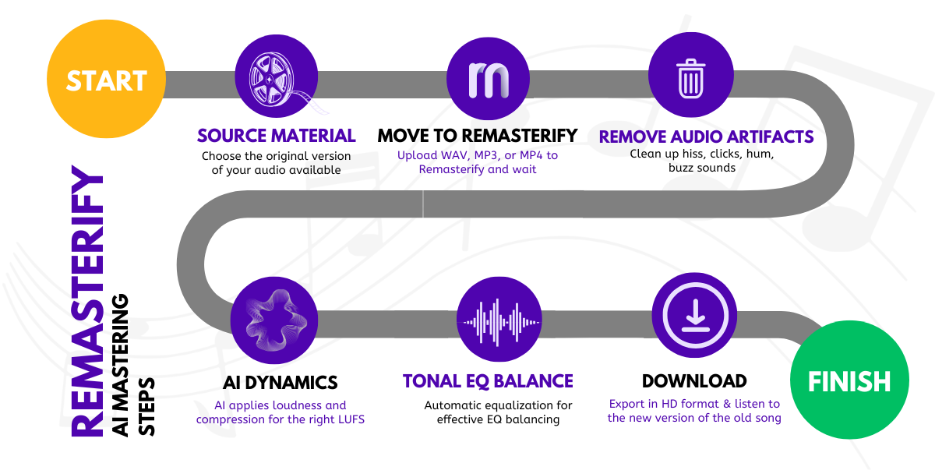
AI tools have changed how remastered audio is approached because they make complex decisions faster and more consistently. Traditional remastering depends heavily on manual adjustments and long listening cycles, but AI can detect tonal imbalance, noise issues, and loudness problems with impressive accuracy. This does not replace human judgment, but it gives artists and engineers a cleaner starting point. For many creators, especially those working with older or home recorded songs, this shift makes high quality remastering more accessible than ever.
This is exactly where Remasterify stands out. Instead of offering a generic preset, the system reads the audio, studies the tonal structure, finds weak spots, and applies targeted improvements. The process treats each track individually rather than forcing a one size fits all style. Users often notice clearer vocals, a more stable low end, and smoother loudness without feeling like the song was over polished. The goal is to match the standards of platforms like Spotify and Apple Music while keeping the character of the original mix intact. Remasterify gives independent artists and early-stage creators a reliable way to refresh older songs without needing a studio or deep technical knowledge.
Remastered music often reminds us how much detail older recordings can hold when given the right treatment. The process does not rewrite the performance. It simply brings forward the clarity, balance, and depth that time and technology once limited. When done well, a remastered song feels familiar yet renewed, like hearing an old memory with sharper focus. For listeners, it becomes easier to appreciate the music without fighting against noise, dullness, or uneven volume. For artists, it becomes a chance to let their earlier work shine in the environment people listen in today. Whether the improvement feels subtle or significant, a good remaster strengthens the connection between the song and the listener, which is what keeps music alive across generations.