You have probably watched singers in a recording studio or a podcaster speaking into a mic, and they are wearing headphones. It is not simply a habit; there’s a real reason behind it.
When we speak or sing in a room, we hear ourselves naturally. But recording is a different game. The microphone doesn’t hear things the way our ears do. In simple words: without headphones, the recording can easily turn messy. We’re discussing the reasons below.
Headphones help singers stay in tune, podcasters sound clear, and recordings stay clean. If you’ve ever wondered why singers wear headphones in the studio, the answer goes beyond habit, it’s about keeping the sound clean and professional. In this blog, we’ll know the simple reasons why headphones matter so much in recording.
When you first see someone recording with big headphones on, it might feel unnecessary, or simply fancy. You may wonder why not just listen through speakers, or skip listening altogether. Don’t judge so easily. Here’s the truth: recording has many small challenges that headphones help fix.
Headphones are not just for style, they’re a tool.
1. To Prevent Sound Bleed
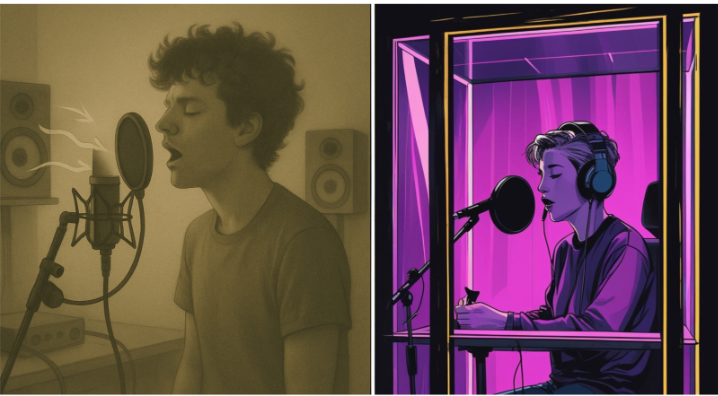
One of the biggest problems in recording is sound bleed. This happens when the microphone picks up more than just your voice. For example, if the backing track plays on speakers while you sing, the mic will also record that track again. The result is: a messy recording where the music and your voice overlap.
NB: What is sound bleed? Sound bleed is when unwanted audio leaks into a microphone during recording. Suppose, if music plays from speakers, the mic picks it up along with your voice. This makes the final recording unclear and harder to edit.
Headphones solve this by keeping all the music or cues inside your ears. The microphone then hears only what it should: your clean voice or speech.
2. To Hear Backing Tracks Clearly
Whether it’s a singer keeping in tune with an instrumental, or a podcaster syncing with intro music, hearing the track clearly matters. If the track comes from speakers, it competes with the live voice. Headphones give a private, noise-free way to listen.
It also helps avoid timing issues. Everything stays in sync because the track is fed directly to the ears, not bouncing around the room.
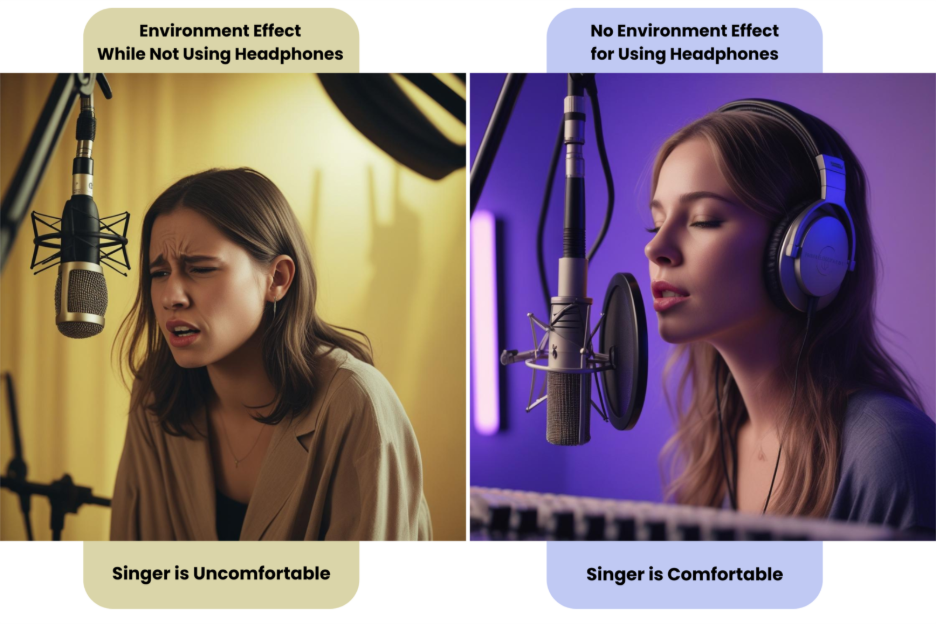
Without Headphones
With Headphones
Music leaks into mic
Music stays private
Hard to stay in sync
Timing stays accurate
Mixed-up recording
Clean, professional take
3. For Timing & Rhythm Accuracy
Recording isn’t just about hitting the right notes, it’s also about staying on beat. Without headphones, it’s easy to drift. Your natural voice in the room feels different from what the mic captures, and that little difference can throw off rhythm.
Headphones act like a personal “metronome.” They deliver the track or click sound directly into your ears so you stay perfectly aligned with the beat. For podcasters, this means smoother intros and outros with music. For singers, it means not falling behind or jumping ahead in the song.
NB: What is a metronome? A metronome is a tool that plays steady clicks or beats to help musicians keep time. In recording, it ensures the singer or speaker stays in rhythm with the track.
4. To Monitor Their Own Voice in Real-Time
Here’s something surprising: the way we hear ourselves naturally is not the same as how the mic records us. That’s why many people say, “I don’t like my recorded voice.”
Headphones let you hear exactly what the microphone hears, your mic voice, in real time. This helps you adjust on the spot. Too loud? You pull back. Too soft? You bring your voice up. Off pitch? You notice immediately. For podcasters, podcast headphones are just as important, they let the host hear every word clearly and adjust their tone on the spot.
NB: What is mic voice? Mic voice is how your vocals sounds when picked up by the microphone. It often feels different from what you hear naturally, because the mic captures sound more directly and without the “inside your head” effect.
It’s like holding a mirror while drawing. You can fix mistakes before they’re locked into the recording.
5. To Maintain Consistent Volume Levels
Sometimes beginners either whisper too much or shout too much when recording. Without headphones, you can’t tell how uneven it sounds until playback.
Headphones make it obvious. You hear if your volume is spiking or dropping, and you naturally balance it out. This makes editing and mixing much easier later on. Headphones also improve vocal clarity by helping performers avoid muffled or uneven delivery.
6. To Create a Professional Recording Environment
Using good studio headphones helps block distractions and gives a clean, accurate sound, making recording feel more controlled. However, headphones also create a mental bubble. They block outside noise and help performers focus only on the track and their voice. This focus can change the performance, singing feels more controlled, and podcasting feels more natural.
On stage, many artists use a singer earpiece, also called an in-ear monitor, instead of bulky headphones. For the same reason: to stay in control of what they hear while blocking distractions.
NB: What are in-ear monitors? In-ear monitors are small earpieces used by live performers. They work like headphones, letting singers and musicians hear music or their own voice clearly on stage while blocking outside noise.
In a Nutshell,
Headphones may look like a simple accessory, but in recording they’re essential. They keep the sound clean, help singers and podcasters stay on the beat, and let performers hear themselves the way the microphone does. Without them, recordings often turn messy and harder to fix later. Whether in a home studio or on stage, headphones give clarity, control, and focus, that turns a casual take into something that sounds professional.