
When you listen to a song with headphones, some sounds seem to come from the left, others from the right, and some stay right in front of you. That’s the effect of audio panning which is an essential part of mixing music that gives every sound its own space and makes the track feel wider and more immersive. In this guide, we’ll explain what audio panning is and how to position different elements across the stereo spectrum for a balanced mix.
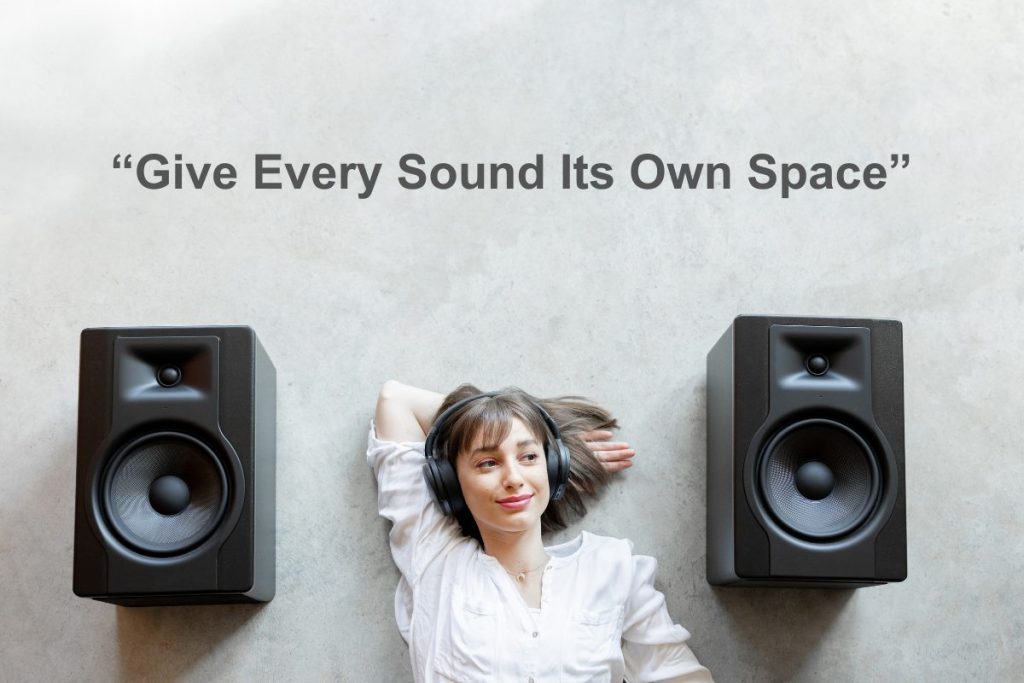
Table of Contents:
How to Pan Different Elements in a Mix
5 Audio Panning Tips for a Balanced Mix
What is Audio Panning?
Audio panning means placing sounds within the stereo mix – to the left, right, or center. It’s like positioning instruments on a virtual stage so each one has its own space. By adjusting how much of a sound is sent to each speaker, you shape the stereo image and make your mix feel more balanced.
Good audio panning keeps instruments from fighting for space. For example, if both guitars are in the center, they can sound messy. But placing one slightly left and the other slightly right makes the mix easier to listen to.
Benefits of Audio Panning
- Creates space in the mix: Each sound has its own position, so instruments don’t clash. For example, keep vocals in the center and guitars slightly to the sides.
- Improves clarity: When sounds aren’t stacked in one spot, you can hear every detail clearly.
- Adds width and depth: Smart audio panning helps your song feel wider and more immersive, like it’s surrounding the listener.
- Makes mixes sound natural: A balanced stereo image mimics how we hear live music – each sound coming from a different direction.
How to Pan Different Elements in a Mix
Panning is all about balance. Each sound should have its own place across the stereo field so that your mix feels open and organized. Here’s a simple breakdown:
- Lead Vocal: Center — it should stay clear and focused.
- Octave-Up or Double Vocals: Center or slightly off-center for thickness.
- Backing Vocals / Harmonies: Around 30–40% on either side for width.
- Kick and Snare: Center — they form the backbone of your mix
- Hi-Hats: Around 30% to one side.
- Shaker: Opposite side of the hi-hats for balance.
- Toms: 50/50 for two toms or 100/100 + center if using three (left, right, middle).
- Percussion (Claps, Bongos, etc.): Spread across 20–60% for a natural feel.
- Bass: Always center — keeps your low end tight and powerful.
- Rhythm Guitars: 70/70 or 100/100 left and right for width.
- Lead Guitar: Slightly off-center, around 15% to one side to stand out.
- Synths / Chords (Low End Info): Around 30/30 on both sides for fullness without mud.
- Pads / Ambient Layers: Wider spread (60–80%) for atmosphere and depth.
5 Audio Panning Tips for a Balanced Mix
Keep low-end sounds in the center.
Always center your kick, bass, and snare. These carry the weight of your mix and should sound stable on any speaker system.
Balance every move.
If you pan one element to the left, try placing another with a similar frequency range slightly to the right. This keeps your stereo image even and avoids one side feeling heavier.
Don’t over-pan.
Extreme left or right (100%) can sound unnatural unless it’s for a specific effect. Staying within 30–80% usually keeps your stereo mix wide but controlled.
Use automation for motion.
Slightly automate audio panning on effects like background vocals, percussion, or synths. Subtle movement adds life and keeps the mix engaging.
Always check in mono.
Collapse your mix to mono occasionally to ensure nothing disappears or clashes. This helps you catch phase issues and guarantees your mix sounds balanced everywhere from big speakers to phone earbuds.
Conclusion
Good audio panning is less about fancy tricks and more about smart placement. By giving each sound its own space, you create a clear and natural stereo image that feels open and balanced. Whether you’re mixing vocals or guitars, think of panning as organizing a stage. Subtle moves often make the biggest difference in your stereo mix.
Frequently Asked Questions
What does audio panning mean?
Audio panning means placing sounds in the stereo field. It can be either left, right, or center of the stereo spectrum to create space.
Should I EQ before panning?
Yes, it’s usually better to EQ before panning. Cleaning up frequencies first helps you hear how each sound fits in the mix when you start positioning it.
What are common panning mistakes?
Common mistakes include over-panning, putting too many sounds in the center, and not checking mixes in mono, which can cause phase issues or uneven balance.
What is the best technique for panning?
There’s no single best way, but a good rule is to keep bass and vocals centered, and spread supporting instruments (like guitars or backing vocals) evenly for a natural stereo image.