
When it comes to mixing music, one common debate is whether to rely on studio headphones or studio monitors. Both tools help mixing engineers make decisions about balance, clarity, and overall sound. Headphones offer detail and isolation, while speakers interact with the room to create a natural soundstage. Understanding the strengths and weaknesses of each is important before choosing what to use.
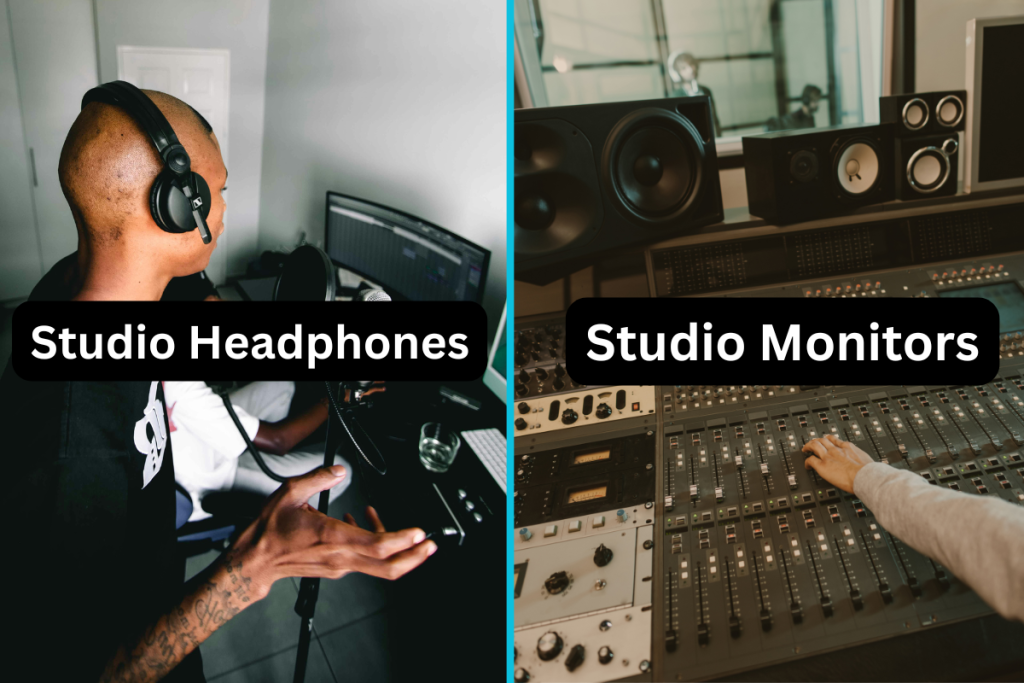
In this blog, we’ll look at mixing with headphones, mixing with speakers, and how combining both can give better results.
Table of Contents:
Fundamental differences between headphones and monitors
Mixing with Studio Headphones
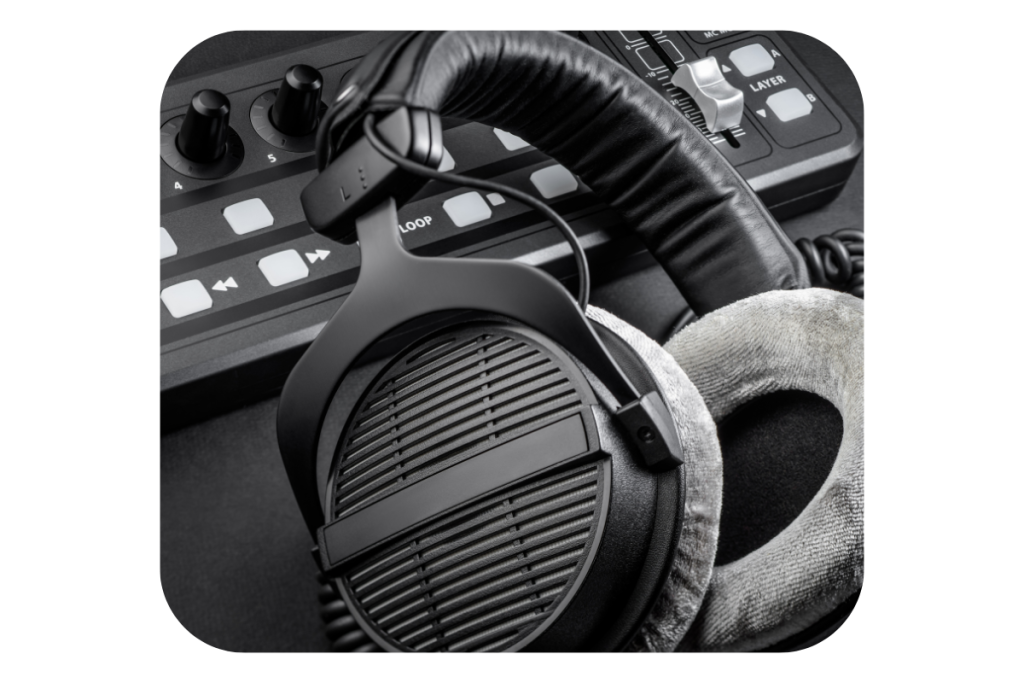
If you’re mixing at home, studio headphones can feel like the simplest option. They block out the room (only if you’re using closed back headphones) and put the sound directly in your ears. This makes mixing with headphones practical when you don’t have an ideal space or can’t play music loudly. Headphones give you detail and convenience, but they can also trick your ears in some ways.
Pros
- No room problems – Headphones cut out reflections from walls, so you don’t need an acoustically treated room.
- Hear small details – They reveal clicks, breaths, or background noise you might miss on speakers.
- Good for quiet spaces – Helpful if you live in an apartment or need to work at night.
- Lower cost setup – Buying quality headphones is often cheaper than a full speaker system.
- Portable – Easy to use anywhere, from a bedroom to a train ride.
Cons
- Unnatural stereo width – Sounds may feel wider than they actually are.
- Ears get tired – Long sessions can cause fatigue and make decisions harder.
- Frequency response issues – Some headphones boost bass or treble, which can fool your ears.
- No room feel – You don’t feel the sound move through the air, especially in the low end.
Looking for the best studio headphones under $100? Check out our detailed guide here.
Mixing with Studio Monitors
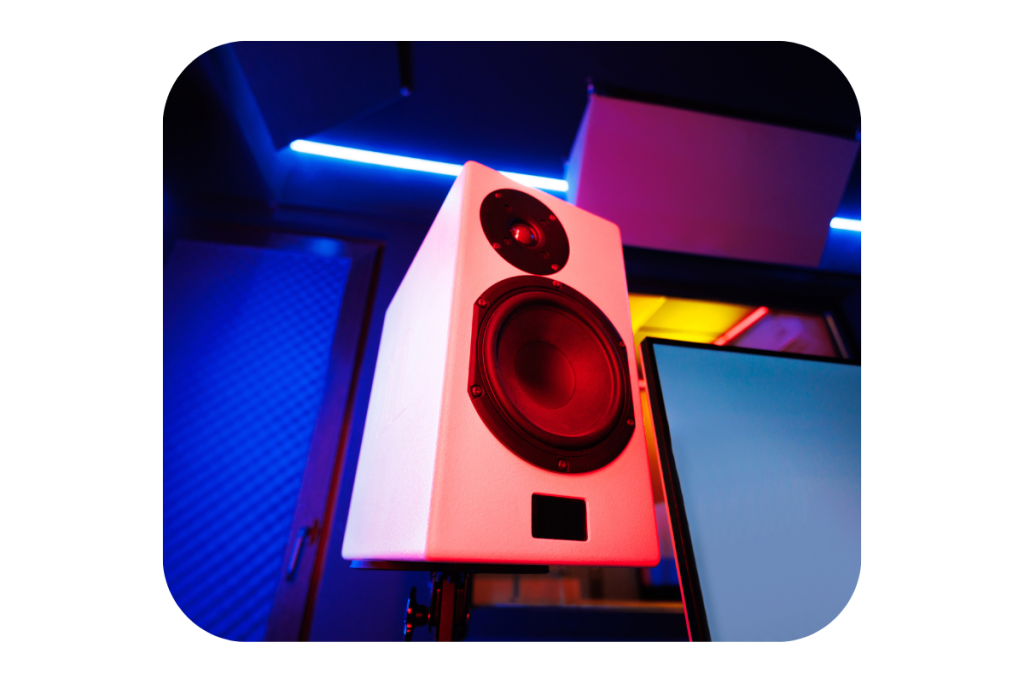
If you have the space for it, studio monitors are often considered the standard for mixing. Unlike headphones, they let the sound interact with the room, which gives you a more natural perspective. This makes mixing with speakers closer to how people usually listen to music – through speakers in their car, living room, or at a party. Still, monitors also have challenges, especially if your room isn’t treated.
Pros
- Natural soundstage – You hear the music the way it spreads in a room, not just inside your ears.
- Better balance judgment – It’s easier to place vocals, instruments, and effects in the mix.
- Physical depth – You can feel the bass and low end move through the air.
- Closer to real-world listening – Most people listen through speakers, so your mix translates better.
- Less ear fatigue – Monitors are generally more comfortable for long sessions.
Cons
- Room-dependent – Reflections, poor acoustics, and small spaces can ruin accuracy.
- Higher cost – Quality monitors plus room treatment are usually more expensive.
- Noise issues – Playing music loudly can disturb others in your home or neighbourhood.
- Less detail on small flaws – Tiny clicks or background noise might not stand out as clearly.
Fundamental differences between headphones and monitors
1. Frequency perception
With studio headphones, sound goes straight to your ears. The room is out of the equation. That’s helpful, but it also means your brain hears bass and treble differently than it does from speakers in a room. Many headphones are tuned with a “target curve,” not a perfectly flat frequency response. Some lift the bass; some brighten the highs. So, a kick may feel louder in headphones than it will on speakers.
With studio monitors, your frequency response is shaped by the room. Room modes can boost or cut bass. Bare walls can add harshness. Even great monitors won’t sound “flat” in a poor room. This is why placement, basic treatment, and calibration matter. In short: headphones remove room problems but introduce ear-coupling and tuning biases; monitors give a truer sense of air movement but depend on the room.
2. Stereo image
Headphones separate left and right completely. There’s no “crossfeed” from the left driver into the right ear and vice versa. The result is an inside-the-head image that often feels wider than real life. Pans can seem extreme. Reverbs can feel detached from the source. If you rely only on mixing with headphones, you might set narrower pans or over-widen with stereo tools to compensate.
Monitors create a phantom center between the speakers. You hear crossfeed and early reflections from the room, which your brain uses for depth and placement cues. This makes imaging feel “in front of you,” like a stage. For mixing with speakers, it’s easier to judge how far back a vocal sits, how wide guitars really are, and whether the center holds together at different volumes.
3. Translation
“Translation” means your mix holds up everywhere: phone, car, TV, earbuds, club. Headphones excel at catching tiny clicks, breaths, hiss, or low-level distortion. That helps you clean a mix so it doesn’t fall apart on small devices. But decisions made only on headphones can underplay sub-bass or overplay width, hurting playback on home stereos or PA systems.
Monitors, when the room is controlled, reflect real-world playback better. You feel kick and bass as air, so balances are more trustworthy across speaker systems. However, room problems can mislead you and cause mixes that don’t travel.
Practical takeaway for speakers vs headphones: use both. Confirm tonal balance and noise on studio headphones; confirm space, punch, and vocal placement on studio monitors. This two-check system reduces surprises and improves translation everywhere.
Conclusion
Choosing between studio headphones and studio monitors depends on your space, budget, and workflow. Both have strengths and weaknesses, but neither is perfect alone. What matters most is knowing how your setup influences what you hear and learning to trust your ears through practice. With awareness and consistency, you can achieve mixes that sound balanced across different systems.