
When it comes to shaping sound, time-based effects are some of the most powerful tools in music production. Among them, audio reverb and audio delay stand out for the way they add depth, space, and echoing textures to a mix. Still, many beginners struggle to know which one to use and when. In this blog, we’ll break down reverb vs delay, explain what each effect does, their types, and share the best plugins to try.
Table of Contents:
What is Audio Reverb, its types, and when to use it?
What is Delay, its types, and when to use it?
Key Differences between reverb and delay
What is Audio Reverb, its types, and when to use it?
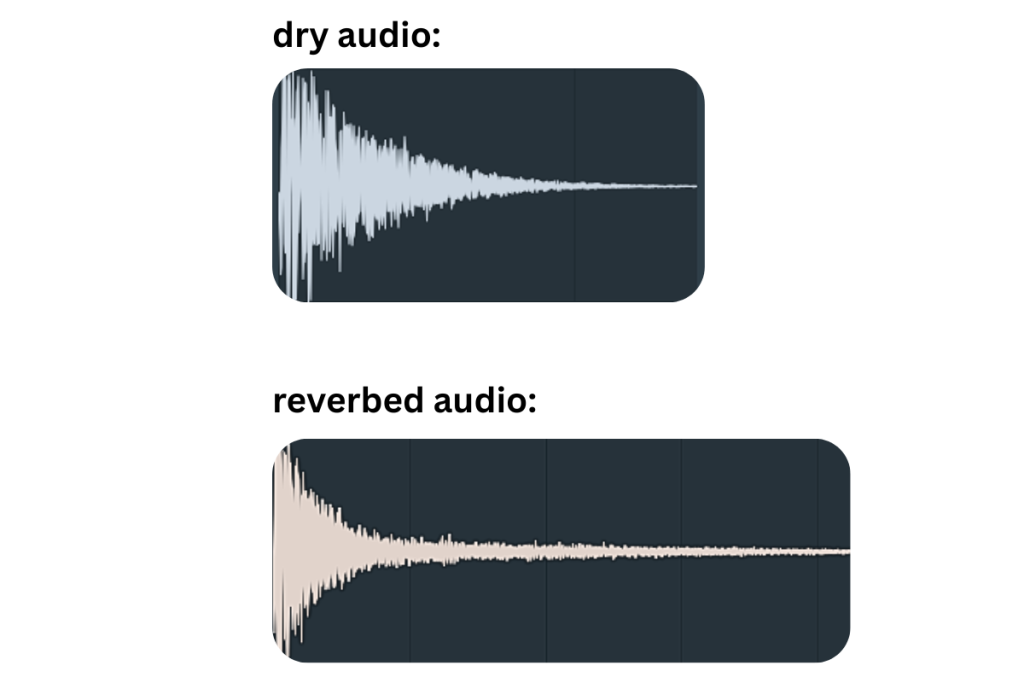
Audio reverb is the natural reflection of sound bouncing around a space. When you clap in a hall or sing in a bathroom, you hear the sound linger. This lingering, made of countless micro-reflections, is what reverb recreates in music production. It helps spread a sound across the frequency spectrum, making it feel “bigger” or more natural.
Types of Reverb:
- Room reverb: Small and subtle, simulating a tight space like a studio room.
- Hall reverb: Large and spacious, often used for orchestral or cinematic sounds.
- Plate reverb: Artificial, bright, and smooth. Great for vocals and snares.
- Spring reverb: Metallic and bouncy, popular in guitar amps.
When to use it?
Reverb is best used when you want to make a sound feel natural, alive, and connected to a space. A completely dry recording can sound flat or unnatural. Adding reverb helps place the performance in a believable environment. Vocals, for example, often need a touch of reverb to blend smoothly into the mix while still sounding intimate. Drums, especially snares and toms, benefit from short reverb tails that give them body without overwhelming the rhythm. In ambient or cinematic music, long hall reverbs can add emotional depth and atmosphere, making the sound feel wide and immersive.
What is Delay, its types, and when to use it?
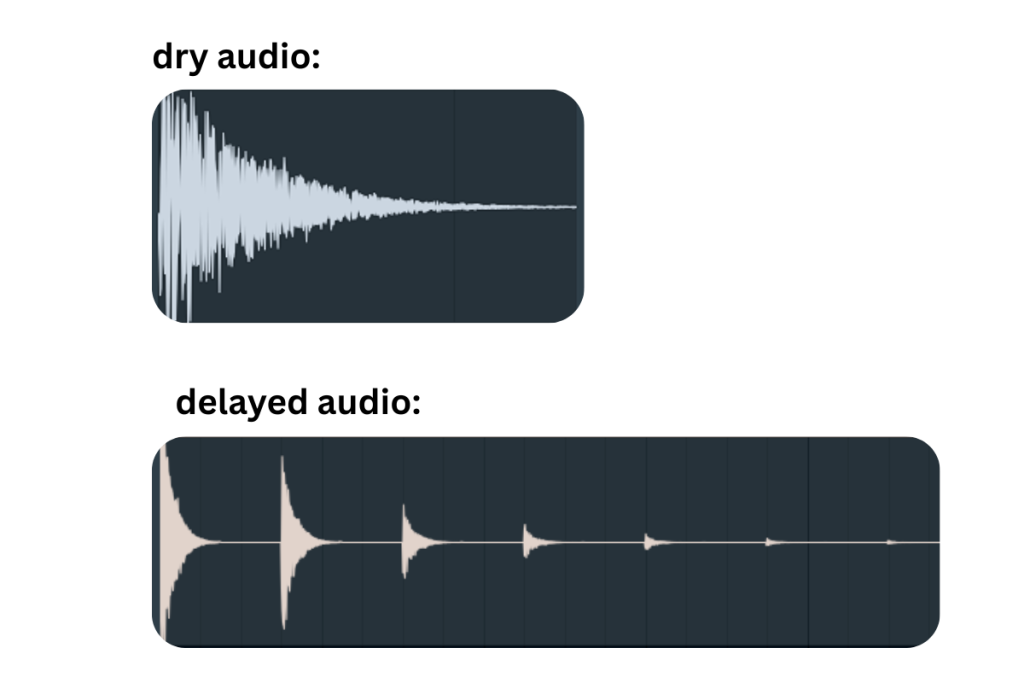
Audio delay is the effect of recording a sound and then playing it back after a set time. Unlike reverb, which creates a wash of reflections, delay produces clear, repeating echoes. These echoes can be short and tight or long and spacious, depending on the settings. Delay is one of the most versatile tools in music production because it can add rhythm, space, or subtle thickness to a sound.
Types of delay
- Slapback delay: A single, short echo often used on vocals and guitars to add presence.
- Tape delay: Warm and slightly distorted echoes, modeled after old tape machines.
- Ping-pong delay: Echoes that bounce between the left and right speakers for a wide stereo effect.
- Digital delay: Delivers sharp, accurate echoes that can easily lock to the tempo of your track.
When to use it:
Delay is ideal when you want to create a sense of movement or rhythm without drowning a track in ambience. Vocals often use short slapback delays to add depth while staying upfront in the mix. Guitar leads sound more energetic with tempo-synced delays that create repeating patterns. Ping-pong delay is perfect for adding stereo width and making instruments feel larger than life. Delay also works well in electronic and pop music for building texture, or in sparse mixes where reverb might make things too muddy.
Key Differences between reverb and delay
At first glance, reverb and delay may seem similar since both are time-based effects, but they work in very different ways. Reverb creates the impression of a space by layering countless small reflections until the original sound blends into a smooth tail. Delay, on the other hand, produces distinct echoes that repeat at set intervals, making the original sound feel like it is bouncing back.
The main difference lies in clarity versus blend. Delay keeps echoes separate and easy to notice, making it ideal for creating rhythmic or textured effects. Reverb blends everything together, giving the sound an atmospheric wash but often reducing clarity if used heavily.
Another key difference is their role in a mix. Reverb is mostly used to place instruments in a space, making them feel natural and cohesive. Delay is more often used for creative emphasis, like making a vocal line repeat, a guitar part expand, or a synth line bounce across the stereo field.
Top 3 Reverb Plugins
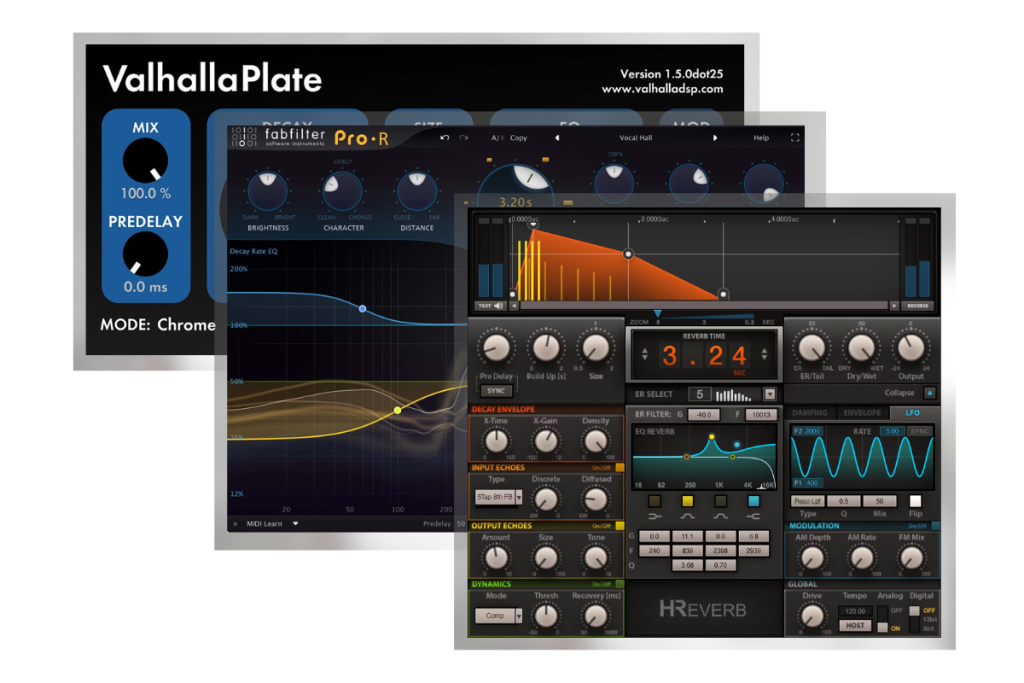
Here are three reverb plugins:
Valhalla Plate
A bright, smooth plate-style reverb that’s highly praised for vocals and instruments. Simple interface, but powerful sound.
FabFilter Pro-R
Highly flexible, with an intuitive UI and excellent control over space, decay, and tone. Many producers call it a go-to for general mixing.
Waves H-Reverb
Has “FIR + algorithmic” design. Offers detailed control over early reflections and tails. Great for creative and more refined reverb design.
Top 3 Delay Plugins
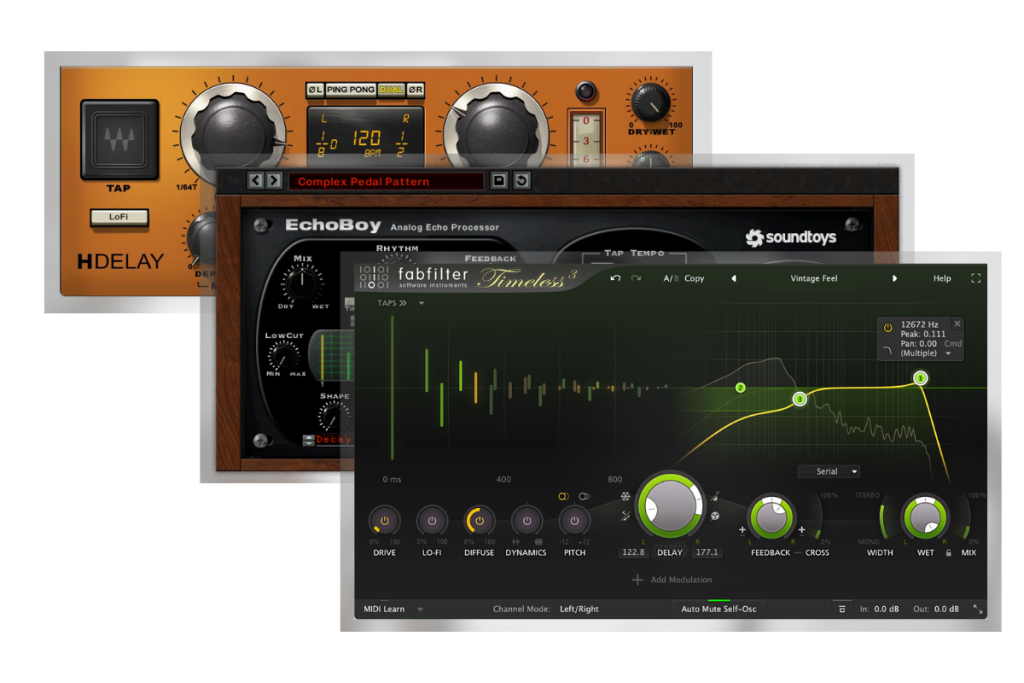
Soundtoys EchoBoy
Very versatile, with many delay types (tape, vintage, digital) and flexible controls. It’s widely regarded as a flagship delay plugin.
Waves H-Delay
Classic and reliable. Offers both clean digital delays and lo-fi, gritty textures. Easy to tweak.
FabFilter Timeless 3
Strong reputation. It combines modern interface with creative options (modulation, filtering) so you can sculpt your echoing exactly how you want.
Conclusion
Reverb and delay are tools that shape the character of every mix. They can transform dry sounds into something lively, emotional, and engaging. The key is experimenting with both until you find what fits your music’s mood. Whether subtle or bold, these effects let you bring space, texture, and movement to your tracks.