
In 1969, a band called Led Zeppelin released a song that opened with a single guitar riff. Four bars, played slow, built from a handful of notes. The song was “Whole Lotta Love.” The riff has been stuck in the head of every guitar player since.
Here’s what most people don’t realize. That riff uses five notes. Just five. The same five notes you’ll find in the melody of “Amazing Grace,” the bassline of “My Girl,” the hook of “Sweet Home Alabama,” and the solo on “Stairway to Heaven.”
Different bands. Published in different decades. And that too in different genres. But with Same five notes.
That’s the pentatonic scale. Sometimes called the pent scale for short, it’s a five-note system that has quietly shaped music for thousands of years, across cultures that never spoke the same language. It’s the reason a beginner can pick up a guitar and play something that sounds good on day one. It’s also the reason a song you’ve never heard can feel familiar in the first three seconds.
In this guide, you’ll learn what the pentatonic scale actually is, why five notes instead of seven, how cultures from China to Scotland to West Africa landed on the same scale independently, and how those five notes ended up inside almost every song you love.
By the end, you won’t just understand the pentatonic scale. You’ll start hearing it everywhere.
What the Pentatonic Scale Actually Is
Start with the basics. A scale is just a set of notes a song chooses to use. A standard major scale has seven notes. So does a standard minor scale. You probably know one of them already, even if you don’t think you do.
Do, re, mi, fa, sol, la, ti, do.
That’s a major scale. Seven notes, then the eighth one is the first one again, an octave higher.
A pentatonic scale takes that seven-note scale and removes two of the notes. What’s left is five.
That’s where the name comes from. Pent means five, like pentagon or pentathlon. Some musicians call it the pent scale for short. Most call it the pentatonic.
There are two main versions you’ll meet over and over again. The major pentatonic is bright, open, and hopeful. It’s what you hear in country songs, in pop hooks, in lullabies. The minor pentatonic is darker, bluesier, more emotional. It’s what you hear in blues, rock, hip hop, and almost every sad melody you’ve ever loved.
Same five-note logic. Two very different feelings. If you’re newer to how musical pieces fit together inside a session, it helps to understand the bigger flow of how a song gets built before zooming into scales.
Which raises the obvious question. Why five instead of seven?
Why Five Notes Instead of Seven
Here’s the part most guides skip.
In a seven-note scale, two of those notes sit very close to their neighbors. They’re only a half-step apart, which is the smallest interval Western music uses. Those tight intervals create tension. They’re the notes that sound wrong if you land on them at the wrong moment. They’re what makes music feel like it’s leaning toward something, waiting to resolve.
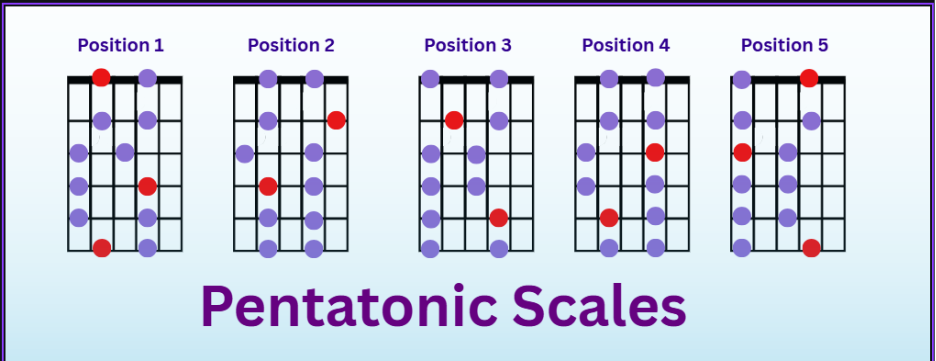
Take those two tense notes out and something interesting happens. The five notes that remain all sound good against each other. There’s no obvious wrong move. Almost any note in the scale will work over almost any chord built from the same scale.
That’s why a beginner can pick up a guitar, learn one pentatonic shape, and immediately make something that sounds musical. The scale is forgiving. It removes the traps.
But that’s not the only reason it matters. The pentatonic isn’t a clever shortcut someone invented to help beginners. It’s much older than that, and much bigger than that.
It’s a scale that humans, all over the world, kept discovering on their own.
The Pentatonic Scale Across the World
Walk into a Chinese folk music performance and the melody is pentatonic. Listen to a Scottish bagpipe tune and the melody is pentatonic. Hear a West African kora player, a Japanese koto piece, a traditional Andean flute song, a Native American chant. All pentatonic, or close to it.
None of these cultures borrowed the scale from each other. They couldn’t have. They were separated by oceans, mountains, centuries. And they arrived at the same five notes independently.
That’s not a coincidence. That’s a clue.
When this many different cultures land on the same answer without copying, the answer is telling you something about how human ears are wired. The pentatonic scale isn’t a Western invention or a guitar trick. It’s something close to a universal human discovery, like the wheel or the lever, except for sound.
Which is why, when modern Western music started borrowing from those traditions, the pentatonic was already waiting.
How the Pentatonic Scale Built Modern Music
This is where the story gets interesting.
When enslaved Africans brought their musical traditions to America in the 18th and 19th centuries, those traditions were heavily pentatonic. Mixed with European harmony and the rough conditions of the American South, the result was the blues. Almost every blues melody you’ve ever heard is built on the minor pentatonic, with one extra note added in for flavor. Musicians call it the blue note.
The blues fed everything that came next.
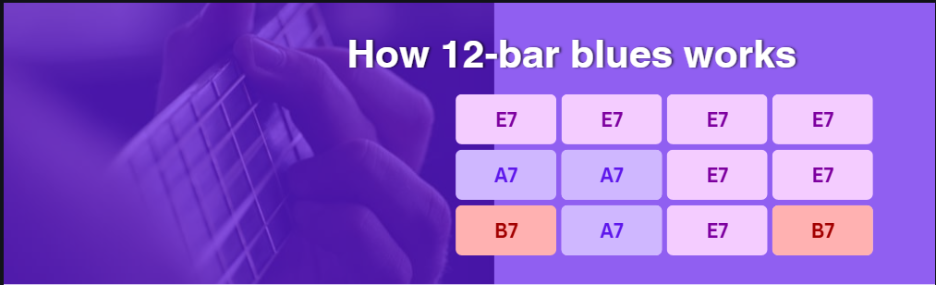
Rock and roll grew out of the blues. Chuck Berry’s solos, the ones that defined how electric guitar would sound for the next seventy years, are almost entirely pentatonic. Jimi Hendrix played pentatonic. Jimmy Page played pentatonic. Eric Clapton built a career on it. Listen to “Sunshine of Your Love,” “Johnny B. Goode,” “Whole Lotta Love,” “Purple Haze.” Different sounds, same scale underneath.
Country music took the major pentatonic and ran. Hank Williams, Johnny Cash, Dolly Parton, Willie Nelson. Listen to a classic country melody and you’ll find five notes doing most of the work.
Pop hooks are pentatonic for a different reason. They’re easier to sing. A pentatonic melody removes the tricky intervals that make a song hard to hum back, which is why songs you only half-remember are usually pentatonic in the parts you do remember.
Hip hop sits on top of all of this. The hooks, the vocal melodies, the sampled riffs from old soul and funk records are constantly pulling from pentatonic patterns. Travis Scott, Drake, Kendrick Lamar, even back to Run-DMC. Listen to the melodies underneath. Five notes, doing a lot of work.
Once you know the pattern, you can’t unhear it.
Major Pentatonic vs Minor Pentatonic
Both have five notes. Both come from the seven-note parent scale. The difference is in which two notes get removed and where the scale starts.
The major pentatonic feels bright. Open. Hopeful. It’s the sound of “My Girl,” of “Amazing Grace,” of nearly every country chorus you can hum. Songwriters reach for it when they want a melody that lifts.
The minor pentatonic feels darker. Sadder. More tense. It’s the sound of the blues, of most rock solos, of nearly every emotional ballad with a sense of weight. Songwriters reach for it when they want a melody that aches.
Same five-note logic. Two very different emotional rooms.
If you’re new to scales and want to keep building, the next layer worth learning is the Circle of Fifths, which shows how all the keys connect.
Why Pentatonic Melodies Translate So Well
Here’s something most music theory posts never mention.
Pentatonic melodies aren’t just easy to sing. They’re easy to hear, even in bad conditions.
A melody built from tight, complex intervals can muddy on a small speaker. The harmonics overlap. The notes start fighting each other. By the time the song reaches a phone speaker in a noisy room, the melody you worked hard to write can sound like a smear.
Pentatonic melodies don’t have that problem. The five notes are spaced far enough apart that they stay distinct on almost any system. They hold up on AirPods. They hold up on car speakers. Also they hold up on a laptop in a coffee shop. The melody you wrote is the melody the listener actually hears.
That’s part of why pentatonic-based songs dominate streaming. A great hook only matters if it survives the journey from your studio to a stranger’s earbuds.
A pentatonic melody gets you most of the way there. Good mastering finishes the job. If you want a deeper walkthrough of that final step, here are the five steps that turn a finished mix into a release-ready master. And if loudness is where your tracks usually fall apart, this guide on reading audio meters is worth a read.
Remasterify is built for exactly that final step, making sure the song you wrote is the song the world actually hears.
Five Notes, Endless Songs
Five notes. Thousands of years. Almost every song you know.
The pentatonic scale isn’t a beginner tool. It’s the foundation pop music was built on, the scale that humans kept discovering on their own from China to Scotland to West Africa, the system that runs underneath the blues and the rock solos and the country hits and the hip hop hooks.

Once you start hearing it, you’ll find it everywhere. In the riff you can’t stop humming. In the chorus that stops a room. Or in the lullaby a stranger sings in a language you don’t speak.
Five notes did all of that. They’re still doing it. The next great hook is probably built from them too.
You found the hook.
You wrote the melody.
Now make sure it sounds the same way on every speaker it lands on.
Remasterify masters your track in minutes, free to try, no credit card needed.