
A lot of music creators think they have a mixing problem when they actually have a signal flow problem.
The session is open. The plugins are loaded. The sounds are there. But the mix still feels confusing.
The real problem is that one track sounds too loud; another disappears. Plus, the reverb feels wrong, and the whole session starts feeling heavier than it should.
This is more common than you think.
You can know what EQ does. May be you can know what compression does. You can even understand reverb in a basic way. But if you do not know where the sound is going, mixing can still feel messy and random.
That is why learning audio signal flow matters so much. It helps you see the full road your sound is traveling on. Once that road becomes clear, your decisions become clearer, too. And this is also the reason you’re here, looking for some knowledge.
Here you go!
What audio signal flow actually means
Audio signal flow is simply the path your sound takes.
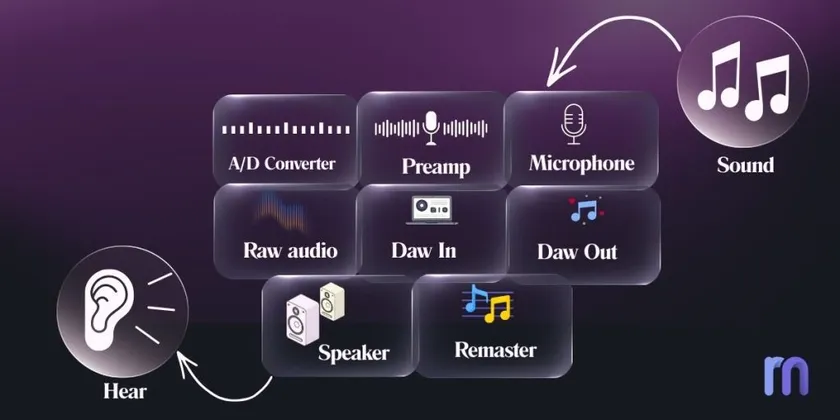
It starts somewhere, moves through different stages, gets shaped along the way, and then reaches your speakers or headphones. A very simple version looks like this:
sound source → microphone or instrument → interface → DAW → processing → master → speakers
That is the audio signal flow.
In plain words, it means four things: where the sound starts, where it goes next, what changes it, and where it ends up. Once you understand those four things, mixing stops feeling like blind guessing.
And yes, the order matters.
A sound does not just jump around randomly. It follows a path. If that path is clean, your session feels easier to control. If that path is confusing, your mix usually feels confusing too.
Here’s an info-graph for you that will make everything sense.
Why you should learn audio signal flow before you mix
Learning where your audio is going can solve many problems.
That is the real reason this topic matters. Audio signal flow is not just a technical lesson for engineers. It is a practical skill for anyone who wants to mix music with less stress.
When you understand signal flow, you begin to notice where the sound is going. Is it landing on the right track? Is it being sent to an aux? grouped in a bus? Is it reaching the master? Or is it going nowhere at all?
Those questions save time.
They also save your energy. Instead of trying random fixes, you can follow the sound step by step. That is what turns confusion into confidence. You stop hoping the session behaves. You start understanding why it behaves the way it does.
The hidden reason many beginner mixes fall apart
A lot of beginners suffer because they are sending tracks to the wrong output.
This happens all the time, and it does not mean they are bad at mixing. It just means they have not fully learned the path yet.
A vocal may be going to the wrong bus. A reverb may be returning too loudly. A guitar may be bypassing its group. A drum track may not be reaching the master correctly. The creator hears that something is wrong, but because the signal path is unclear, the fix also feels unclear.
So they start changing other things.
They tweak EQ. They lower the fader. And, they swap plugins. They blame the sound itself. But the real issue is often much simpler. The sound is just not going where it should go.
That is why signal flow is so powerful. It helps you spot the real problem instead of chasing the wrong one.
The full signal path every beginner should understand
Before you mix better, you need to know the full road your sound is traveling on.
Input
This is where the sound enters the system. It can be your microphone, your guitar, your keyboard, your interface input, or even a sample being brought into the DAW.
If the sound does not enter properly, everything that comes after becomes harder.
Channel or track
This is where the sound lives once it is inside your DAW. A track gives you control over the signal. You can adjust level, panning, and processing here. For many creators, this is where mixing feels like it begins.
But the track is only one part of the journey.
Inserts
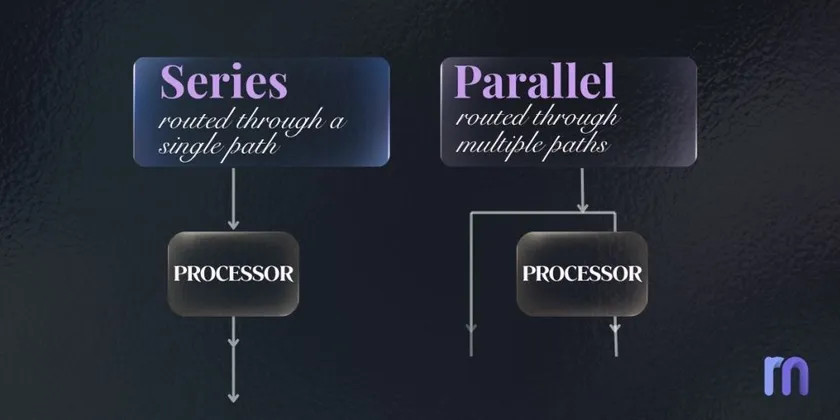
An insert is when you place a plugin directly on the track. The sound passes through that plugin in order. If you add EQ, then compression, then saturation, the sound goes through each one one by one.
That is why the order matters. The same plugins can sound different depending on where they sit in the path.
Sends and returns
A send takes a copy of the sound and sends it somewhere else. A return brings that processed sound back into the mix.
This is how a lot of reverb and delay setups work. Your main sound stays on its track, but a copy goes to another place for extra processing.
Auxes
An aux is a helper path. It often receives the copied sound from a send. That is why auxes are so common for reverb, delay, chorus, and parallel effects.
They let you add space, depth, or character without replacing the original sound.
Buses
A bus is where grouped sounds meet. This is useful when several tracks belong together and need to be treated like one unit. Drums often go to a drum bus. Backing vocals often go to a vocal bus. Guitars can go to a guitar bus.
A bus helps many sounds move together.
Master
The master is the final place where everything arrives before the sound goes out to your speakers, headphones, or export file.
If the signal is not reaching the master correctly, your whole mix will feel broken, even if the individual tracks sound fine on their own.
Fix any audio problem by following the signal
Most mix problems become easier once you follow the sound step by step.
That is one of the biggest benefits of learning signal flow. It helps you troubleshoot without panic.
You can fix problems like;
- No sound coming out
- Inactive input device
- Track is not receiving signals
- Output routed incorrectly
- Master not getting the audio
- Hearing distortion
Not only these, but there’re also plenty of problems you can fix without even going the technical way. Just follow the audio signals to find out how they’re going. For example;
Maybe the input is too hot. Maybe a plugin chain is clipping. Maybe the bus is overloaded. Maybe the master has no headroom left.
Getting too much sound? Maybe the return is too loud. Maybe the track is being doubled. Maybe a send is feeding more effect than you meant.
Hearing reverb in the wrong place? The issue may not be the reverb plugin itself. It may be the send level, the aux return, or the way the signal is being routed.
These are not random mix problems.
They are signal-flow problems.
And once you know how to follow the path, they become much easier to fix.
Mix your music with AI-powered mastering software
Mix better sound by understanding how sound moves
Mixing gets easier when you understand what each path is doing.
A bus is not just a technical feature. It is a way to group sounds and shape them together. An aux is not just another channel. It is a way to share effects without drowning the original track. Sends and returns are not there to confuse you. They help you add reverb, delay, and parallel effects in a more controlled way.
Even inserts become easier to use when signal flow makes sense. You stop throwing plugins on tracks without a plan. You start placing them with purpose.
This is what makes signal flow such a powerful mixing skill. It teaches you how sound moves, and that changes how you build the mix itself. You stop treating the DAW like a pile of tools. You start seeing it as a path.
That alone can make your mixes feel more intentional.
One simple example: follow a vocal through a mix
This is what signal flow looks like in real life.
Let’s say you are mixing one lead vocal.
The vocal is recorded into your interface and enters a track in your DAW. On that track, you add EQ to clean it up. Then you add compression to control the dynamics. After that, you use a send to send some of the vocal to a reverb aux. That aux creates the space around the voice. The main vocal then either goes straight to the master or first joins a vocal bus before reaching the master. Finally, the full signal reaches your speakers or headphones.
Now imagine the vocal sounds too wet.
If you do not understand signal flow, you may start changing everything. Maybe you can lower the track. Maybe you can change the EQ. Maybe you replace the reverb.
But if you understand the path, your thinking changes.
That is the difference signal flow makes. It gives you a better place to look.
Why signal flow gives you confidence, not just technical knowledge
Confidence in mixing comes from knowing what the sound is doing.
That is why this topic matters emotionally, not just technically.
When you understand signal flow, you feel less stuck. You make decisions faster. So, you stop fearing routing. You begin to trust your own process because the session no longer feels invisible.
You can hear a problem and trace it.
Or, you can build a path and understand it.
And, You can change something and know why it changed the sound.
That kind of confidence is not about becoming a technical expert overnight. It is about making your session feel readable. And once that happens, mixing becomes much more enjoyable.
Sound mixing is a skill, and many people who are great with that have claimed on social media. Here’s one of such examples.
It’s not necessary that you will have to capture the same sound you wanted during the recording. You can edit and mix audio the way you want later. There are plenty of free apps available for that. You can try them too to enhance your mixing skills.
Common signs you need to learn signal flow
If these things keep happening, signal flow may be the missing piece.
What can probably happen?
You keep losing sound in your session and do not know why. Your mix clips, but you are not sure where the clipping begins. Or your reverb always feels too loud or too far away. Also, you keep hearing people talk about buses and auxes, but still do not know when to use which one.
Or maybe the sounds themselves are good, but the session still feels messy.
That is often the moment when signal flow becomes the next thing to learn.
Not because you want to sound more technical.
But because you want the mix to make more sense.
📌A Small Reminder
AI does not mean against the creativity
There are many mastering engineers in the industry who still have pessimistic opinions about AI. All they think AI ruins mixes. But in reality, music creation and mastering have passed all the stages.
Earlier, I’m talking about the time around 2021-22 when AI was a new thing. Generative AI just started exploding in the creative field. People started using it. ChatGPT was a new thing for the masses. As a music enthusiast, I did some music research at my first session on that platform.
I still remember it. The first query I made was “tell me the latest release of “Billie Eilish”
After some time, it responded with text. I was happy with the results. By then, ChatGPT did not add up the links. As we all can remember, it was updated up to a certain date in 2021.
With gradual steps, ChatGPT enabled a lot of options. Now everything is there (photo, video, music, and other generated stuff). Interestingly, many other competitors have come up in that space. At present, AI apps have flooded many industries. The music industry is in the middle of that situation.
AI-backed audio mastering is there in the industry for many years now. Does this mean it can replace authentic music creators?
To answer it, I would like to say, “did painters, authors, designers, and other creative artists stop their work?”
We all know it. No.
AI is helping creators to be more engaged with their work. It’s polishing the raw work, giving an edge.
Remasterify is such a platform, which is of course AI-powered and helps musicians to sound their best.
It refines frequencies, fix intensity, equalizes sounds, reduces noise, and other kinds of stuff. It does not distort creativity; rather, enhance the creation.
Remasterify has more than 41K active users across the globe. So far, it has remastered 315K+ songs and audios over the years.
Surprisingly, you can get first-hand experience on this platform without spending your money. Try it for 4 months. It’s free!
Better mixing starts when the sound path stops feeling invisible
That is the real takeaway.
Audio signal flow tells you where your sound starts, where it goes, what changes it, and where it ends up. And once you understand that path, you can fix problems faster, route with more purpose, and mix with more confidence.
A clean signal path does not guarantee a perfect mix.
But it does give you a much stronger foundation.
And that foundation matters. Because if a session already has routing problems, misplaced effects, or broken balance, the final polish stage has to fight those problems first. When the signal flow is cleaner, the track becomes easier to shape into something balanced, clear, and ready for real listening.
That is where better results usually begin.
Let’s create better mixing with Remasterify!