[📌📌 Insights taken from real Drum and Bass artists who have been using these DAWs for a while.]
In 1995, a former graffiti artist named Goldie released a drum and bass album that would change the genre forever. It was called Timeless. The title track ran 21 minutes. The album sold over 100,000 copies in the UK alone and earned a place on the list of 1001 Albums You Must Hear Before You Die.
Goldie did not operate the software. 🧩
The DAW work was done by his engineer Rob Playford at a small studio in Stevenage. Goldie generated the musical ideas, hummed melodies, described basslines, sketched arrangements. Playford pressed the buttons. Together, they spent over twenty sessions on the title track alone, sometimes burning hours on just a few seconds of music.
The most important drum and bass record of the decade was made by a man who never touched the DAW.
This is the part most “best DAW for drum and bass” articles will not tell you. The DAW is a tool. A producer makes the choices. Modern DAWs have converged on features — audio routing, MIDI editing, sidechaining, automation, plugin support are now table stakes in every major one. The differences that remain are workflow differences. And workflow is personal.
The right DAW for drum and bass is not the winner of a contest. It is the one that gets out of your way long enough for you to finish a track. 👨🏻💻
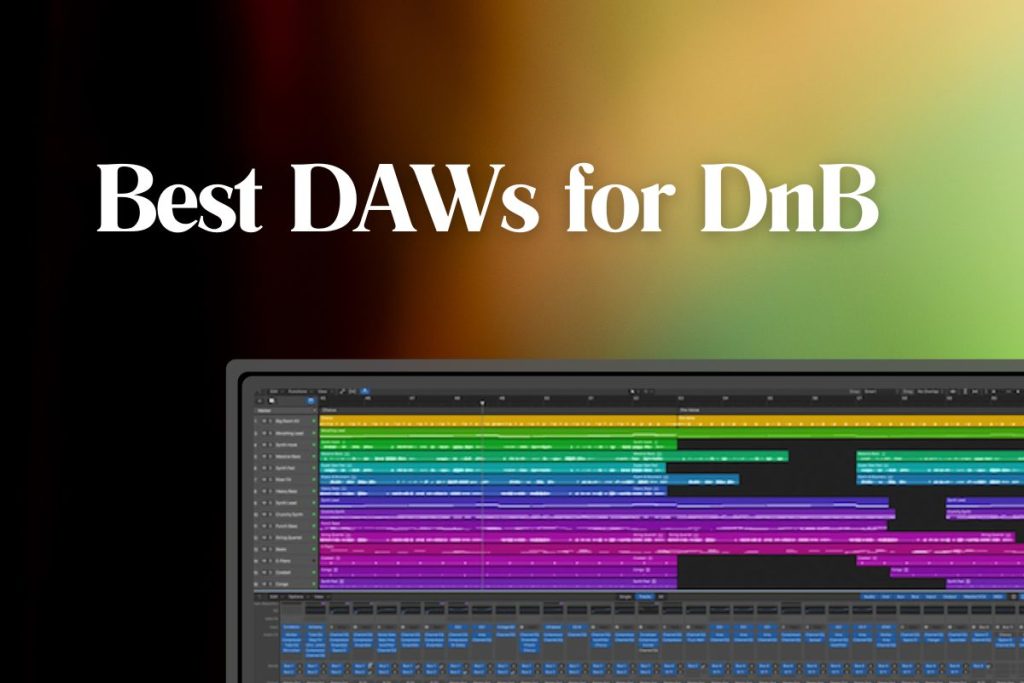
This post is a clear-eyed look at the DAWs working in drum and bass production today, what each one is genuinely good at for the genre, and how to choose without falling into the trap of buying every DAW in the hope that one of them is secretly magic.
If you are new to the genre, our Beginner’s Guide to Drum and Bass is the right starting point. If you already know what kind of DnB you want to make, keep reading.
👉 What is a DAW for producing drum and bass?
A DAW (Digital Audio Workstation) is the software where you actually make your drum and bass tracks — programming drums, designing bass, arranging sections, and mixing the final result. Popular DAWs for drum and bass include Ableton Live, FL Studio, Bitwig Studio, and Logic Pro. The best one is the one you’ll actually finish tracks in.
TL;DR
- No DAW is objectively best for drum and bass. Modern DAWs have converged on features. The differences are workflow, and workflow is personal.
- Ableton Live — the industry standard for electronic music. Strong audio routing, great stock plugins, Session View for sketching. Steeper learning curve, expensive Suite tier.
- FL Studio — fastest to start beats in, best piano roll in any DAW, lifetime free updates. Audio routing is less flexible.
- Bitwig Studio — built for sound design through The Grid modular environment. Smaller community, deeper learning curve, but excellent for custom synthesis.
- Logic Pro — the underrated pick. Great sampler, strong stock plugins, one-time purchase. Mac-only.
- Other DAWs worth knowing — Reaper (cheap, powerful, no stock instruments), Cubase (older but solid), Renoise (niche tracker workflow).
- How to choose: match the DAW to your computer, budget, and priority. Mac and want polish? Logic. Fast beats and lifetime ownership? FL Studio. Long-term tool growth? Ableton. Sound design obsession? Bitwig.
- The DAW does not make the producer. Goldie made Timeless without ever touching one. Pick a DAW, learn it deeply, and finish tracks. That is the only formula that matters.
Why the DAW Matters Less Than You Think
The producer behind any drum and bass track you love made it on a DAW. It may be on Ableton. Or maybe FL Studio. And even something older and weirder. You cannot hear the DAW in the track. What you can hear is the producer’s choices, how they programmed the drums, how they shaped the bass, and how they sequenced the breakdown into the drop.
None of those choices live inside the software. They live inside the producer.
This is why working producers can switch DAWs every few years without their releases suffering. The DAW changes the speed at which you work, the kinds of mistakes you make, the friction you feel at 2 AM when an idea hits. It does not change whether the track is good.
So while this post compares DAWs honestly, keep one thing in mind. The best DAW for drum and bass is the one you will open tomorrow morning. Everything else is a detail.
What to Look For in a DAW for Drum and Bass
If you are choosing a DAW, you do not need every feature. You need the right five.
- Fast beat programming. Drum and bass lives on its drums. Breakbeats, snare rolls, layered percussion. A DAW that lets you sketch a beat in two minutes is worth ten times one that makes you click through menus to do the same thing.
- Strong audio routing. Sidechaining, parallel processing, bus structures. Drum and bass mixing depends on the kick punching through the sub-bass without crushing the bass, which requires clean signal flow. Our guide on audio signal flow covers why this matters.
- A solid sampler. The Amen break is still the most-sampled drum loop in music history, and every DnB producer ends up chopping breaks at some point. A DAW with a fast, intuitive sampler saves real hours.
- Quality stock effects. You can plug third-party effects into any DAW, but a strong out-of-the-box library means you can sketch ideas without buying anything. The best stock plugins are the ones you actually reach for instead of replacing.
- CPU efficiency. Drum and bass tracks get heavy fast. Layered drums, complex bass synthesis, reverbs, delays, sidechains. A DAW that chokes under twenty plugins is not a tool you can finish tracks in.
These five matter more than any specific DAW’s marketing copy. Hold every comparison below up against them.
Ableton Live
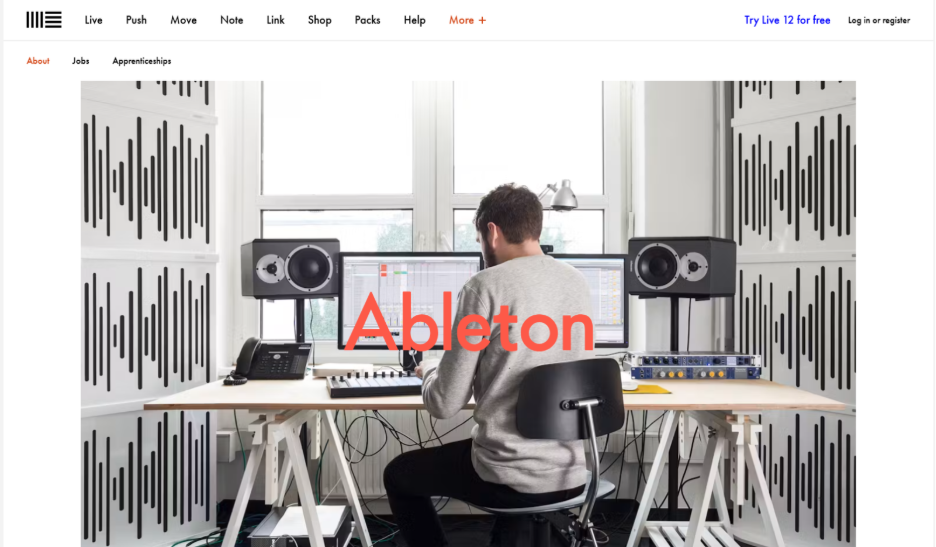
Ableton has become the unofficial industry standard for electronic music, and drum and bass producers are heavily represented among its users.
🤔 What it does well for DnB: the Session View is genuinely useful for sketching beat ideas and arrangements before committing to a final structure. Audio routing is strong and flexible. Stock plugins (Operator, Wavetable, Echo, the Glue Compressor) are pro-grade. The CPU handling under heavy plugin loads is the best in the industry.
😢 Honest cons: the learning curve is steeper than FL Studio’s. The full Suite version is expensive, and the Intro edition is too limited to do serious DnB production in. The piano roll is fine but not class-leading.
👍 Best for: producers who want to grow into a long-term tool. If you can stomach a few months of frustration learning Ableton’s logic, the tool rewards you for years.
FL Studio
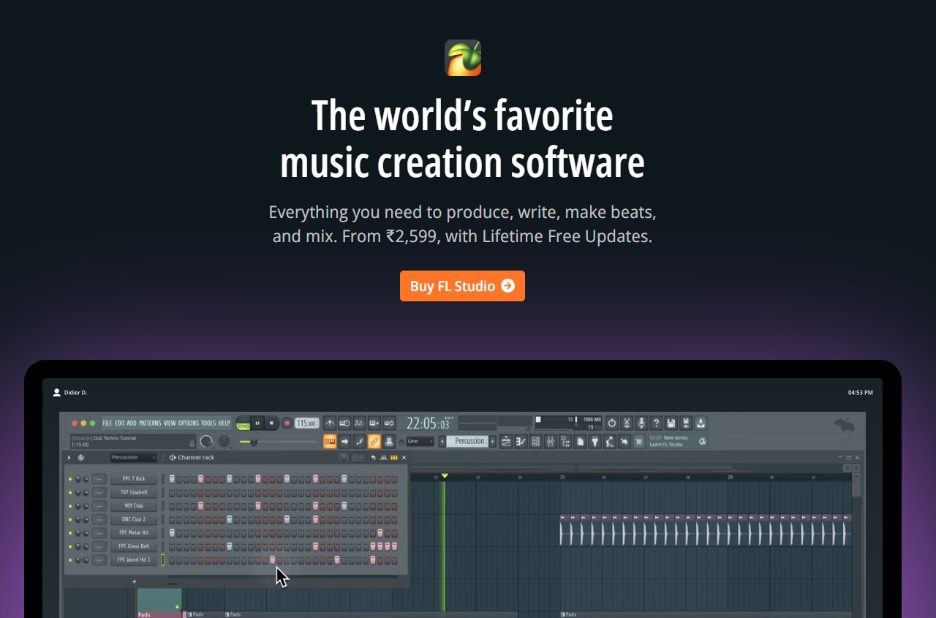
FL Studio dominates the bedroom DnB scene, and for good reason. It is the fastest DAW in the world for getting a beat sketched.
🤔 What it does well for DnB: the pattern-based workflow plus the step sequencer means you can have a basic break and a bassline within ten minutes of opening the program. The piano roll is widely considered the best in any DAW. Lifetime free updates mean you buy it once and never pay again.
😢 Honest cons: audio routing is less flexible than Ableton’s, which can become a real limitation on complex projects. The mixer feels less professional. Some producers eventually outgrow FL Studio and migrate, though plenty of professionals stay forever.
👍 Best for: bedroom producers who want to start beats fast and care less about long-term routing complexity. Especially strong for jump-up and party-oriented DnB where energy and immediacy matter more than intricate sound design.
If you are weighing whether to spend money at all when you are just starting, our guide to the top free DAWs for beginners is worth a read first.
Bitwig Studio
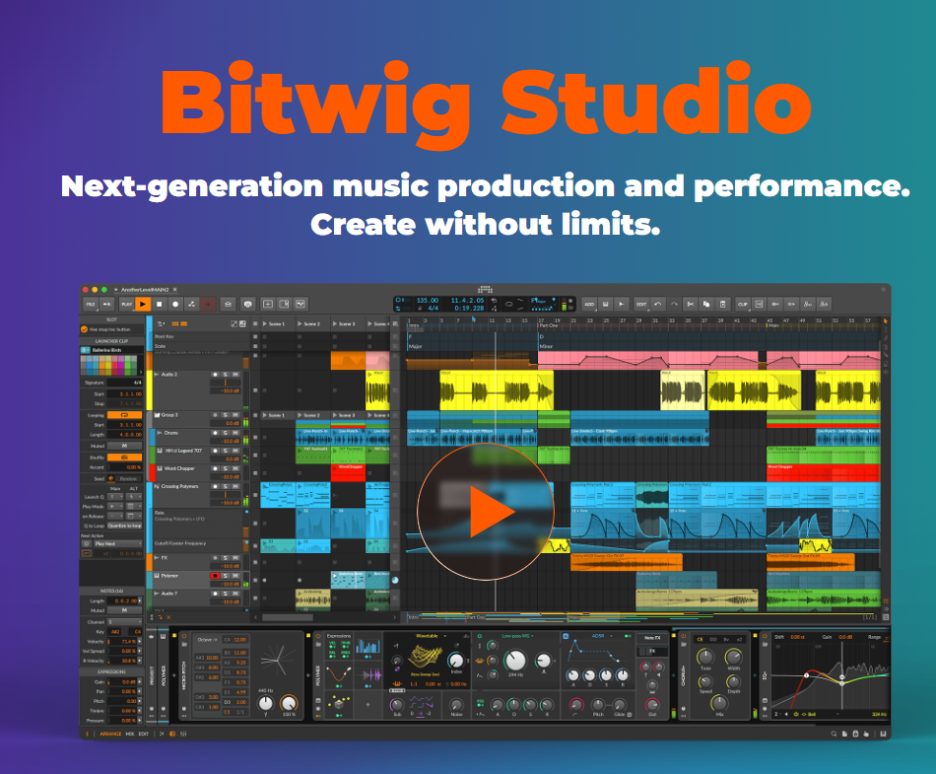
Bitwig has become the rising favorite among DnB producers who care about sound design, particularly in the deeper and more experimental corners of the genre.
🤔 What it does well for DnB: The Grid, Bitwig’s modular synthesis environment, lets you build custom instruments and effects in ways no other major DAW allows. The modulation system is the most flexible in the industry, which matters enormously for evolving bass sounds. Linux support is real, which matters to a small but dedicated minority. The interface is modern and clean.
😢 Honest cons: the community is smaller than Ableton’s or FL Studio’s, which means fewer templates, presets, and tutorials. The learning curve is real, and the genuinely powerful features take time to unlock.
👍 Best for: producers who want to design their own sounds rather than rely on presets, and who plan to spend years getting deep into a single tool. Especially strong for neurofunk, deep, and minimal DnB where custom sound design is the core of the genre.
Logic Pro
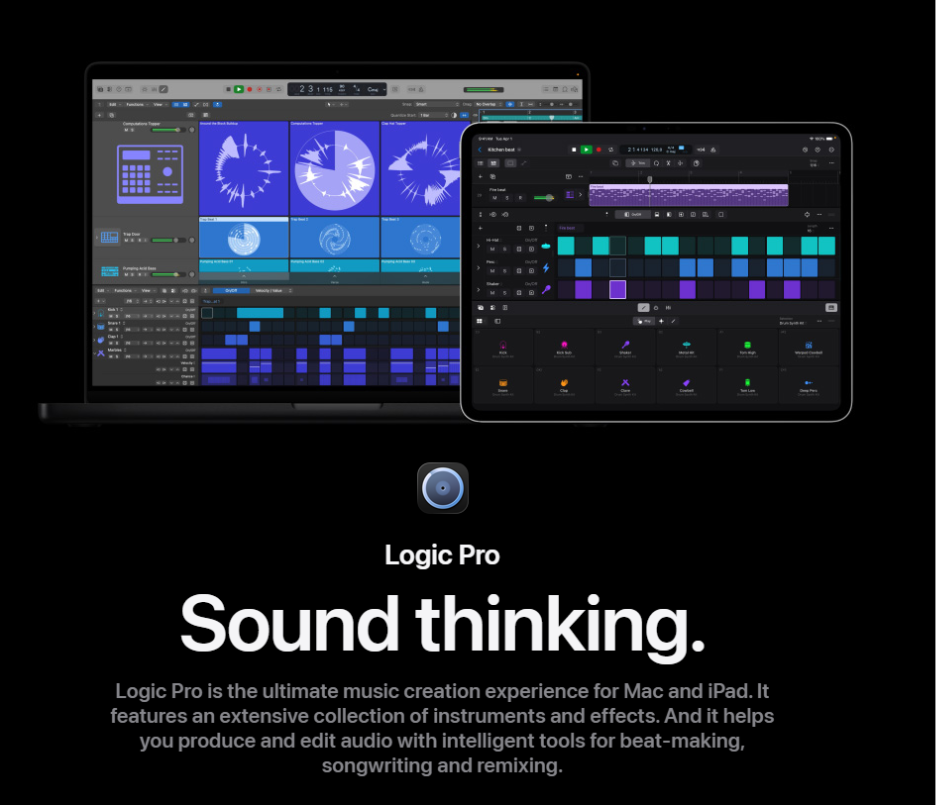
Logic is the underrated pick for drum and bass, and one of the best deals in music software.
🤔 What it does well for DnB: the stock sampler is excellent for chopping breaks. The included instruments (Alchemy, Sculpture, ES2) are strong. The price is a one-time purchase that includes lifetime updates, and the package includes a massive library of samples and loops. The interface is polished and the workflow rewards arrangement-focused producers.
😢 Honest cons: Mac-only, which rules it out for the majority of bedroom producers on PC. Some producers find Logic’s MIDI implementation restrictive once they advance to more complex sound design. The audio routing is solid but less flexible than Ableton or Bitwig.
👍 Best for: Mac users who want a complete, polished DAW at a fair price without ongoing subscription costs. Especially strong for liquid DnB and atmospheric productions where arrangement and melodic composition matter.
Other DAWs Worth Knowing
Three more DAWs see real use in drum and bass production.
✰ Reaper is extremely cheap, extremely powerful, and runs on essentially anything. The catch is that it ships with no built-in instruments. You bring your own. Producers on tight budgets who already have a plugin collection often gravitate to Reaper for its stability and customization.
✰ Cubase has been around longer than most working producers and still has loyal users in DnB, particularly among engineers who value its audio editing precision. Less common as a first DAW, but a solid choice for producers who want a traditional studio workflow.
✰ Renoise is a tracker — a vertical, text-based interface that looks alien if you have not used one. A small but loyal group of DnB producers use it for its precision in sample manipulation and the speed of editing breakbeats. Niche, but not without merit.
How to Actually Choose
If you are still on the fence, three questions will narrow it down faster than any review.
- What is your computer? Mac users have Logic available at a fair price. PC users do not. This alone settles the question for many producers.
- What is your budget? If you cannot or will not pay subscription fees, FL Studio and Reaper both offer lifetime ownership models. Ableton’s Intro tier is affordable but limited. Logic is a one-time purchase. Bitwig has a one-year update plan.
- What is your priority — finishing tracks fast, or designing custom sounds? Finishing fast points to FL Studio or Logic. Designing custom sounds points to Bitwig or Ableton.
Match the answers and the DAW that fits will be obvious.
The DAW Does Not Make the Producer
Drum and bass has been made on every major DAW that exists. The genre’s biggest names have switched tools multiple times across their careers. Sub Focus has worked across multiple DAWs over two decades.
👉 A.M.C builds tracks in FL Studio. Netsky has used Ableton for years.
The common thread is not the software. It is the time they spent inside it.
The DAW you pick first will probably not be the DAW you finish your tenth EP on. That is fine. Every working producer has switched at least once. What matters is not whether you picked the right DAW on day one. What matters is whether you opened it tomorrow.
When the track is done and the mix is clean, the next step is mastering. Our guide on how to master drum and bass for streaming covers the engineering challenge that comes after the DAW work is finished. And if your tracks are coming out muddy regardless of which DAW you are using, this guide on how to mix drum and bass is where to start.
✏️ Ending Note
The most important drum and bass record of the 90s was made by a man who hummed melodies to an engineer pressing buttons in a small studio in Stevenage. The DAW was a tool. Goldie’s vision was the record.
Whichever DAW you pick, that is still the way it works. Pick one. Learn it deeply. Make tracks. The software is not the answer. You are.
DAW does not master your track. Remasterify does that part for you.
Once your DnB mix is ready, Remasterify can deliver a release-ready master in a few minutes with the loudness, headroom, and translation the genre demands.