
As a producer, as a songwriter, I’ve spent a lot of time either in my bedroom or in studios, alone.” — Maggie Rogers
That’s most of us now.
You sit down with a laptop, a mic, and an idea. You write the song. And then you sing it.
Finally you record it. Also do the mixing and mastering your creation. Then simply upload it. But in reality, nobody else touches it along the way.
Most songwriting guides aren’t written for that. They assume someone else will finish the song for you. This one doesn’t.
Here’s how to write a song worth releasing.
The Songwriting Advice You’ve Already Read
You’ve read most of it before.
Find a topic that means something to you. Brainstorm titles before you commit. Blueprint your sections so the chorus has a job and the verses do theirs. Show, don’t tell. Edit with fresh ears in the morning. Trust your gut.
None of this is wrong. Some of it is genuinely excellent. Andrea Stolpe’s principles of prosody, momentum, and restraint are some of the smartest songwriting ideas anyone has put on a page. Songtown’s blueprinting trick has saved a lot of second verses from becoming first-verse leftovers.
The quiet problem is who the advice was written for.
Most songwriting guides assume a clean handoff. The writer writes. Someone else records. Someone else mixes. Someone else masters. Each person handles their part and passes the song down the line.
That isn’t the world you write in.
Your song lives on the same laptop from the first hummed line to the final upload. The same person who picks the key has to sing it at 11 PM with a tired voice. The same person who writes the bridge has to record it through whatever mic they could afford. There is no handoff. There is only you and the song and the small, quiet pressure of being the only ear in the room.
So the advice still applies. It just stops short. It teaches you how to finish writing a song. It doesn’t teach you how to write one worth releasing.
That’s where this post picks up.
Write in the Key Your Own Voice Can Actually Sing
“You have to sing it like you mean it, or don’t bother singing it at all.” — Patti Smith
The first thing most songwriting articles don’t mention is your voice.
When you’re the singer of every song you write, the key isn’t a creative choice. It’s a physical one. The key decides whether the chorus is something you can actually deliver on take twelve, at midnight, with your roommate trying to sleep next door.
Before you commit to a key, sing the chorus melody at the volume and the emotion you’d use on the final take. Sing it tired. Sing it sitting on your bed with no warm-up. If the high note cracks now, it’ll crack on the record too.
The best key for the song isn’t always the most dramatic one. It’s the one your voice can land on every single time without a coffee and a stretch.
When you do start recording, listen back through a real metering setup so you can hear what’s actually happening with your levels and not just trust your headphones. This guide on using audio meters helps you read the room before you commit a vocal you’ll regret.
Get the key right, and the next decision gets easier.
Build the Arrangement You Can Actually Record
“You can’t fall in love with the wallpaper. You have to fall in love with the room.” — paraphrased from a common songwriting workshop principle
Here’s a hard-earned rule. A song that needs a string section, a live drummer, and a horn line is a songwriting choice you’re going to regret at 2 AM in your bedroom.
When you write, write to your real setup. Not the fantasy version with the studio mics and the session players. The actual one. The mic on the boom arm. The interface on the desk. The two monitors and one pair of headphones and whatever room treatment you’ve cobbled together.
This isn’t a limit. It’s a sound.
Some of the best independent records of the last ten years were built inside the constraints of a small room. The constraints become the texture. The lo-fi mic becomes the warmth. The single vocal layer becomes the intimacy.
If you haven’t put your real setup together yet, this guide on a budget home recording studio walks through what you actually need versus what you don’t. Once you know your setup, write to its strengths instead of fighting them.
Every great bedroom record started with someone choosing not to do something.
Use Your DAW as a Songwriting Partner
“I record everything. Some of my best songs came from voice memos I almost deleted.” — (Billie Eilish has spoken about this approach in multiple interviews)
Most songwriting guides treat the lyric and the melody as something you finish before you ever press record.
You don’t have to.
Open a session the moment a line shows up. Sing the rough vocal as a placeholder. Listen back ten seconds later. Hear what’s working before you commit. The DAW is not just where the song gets recorded — it’s where the song can be rewritten in real time.
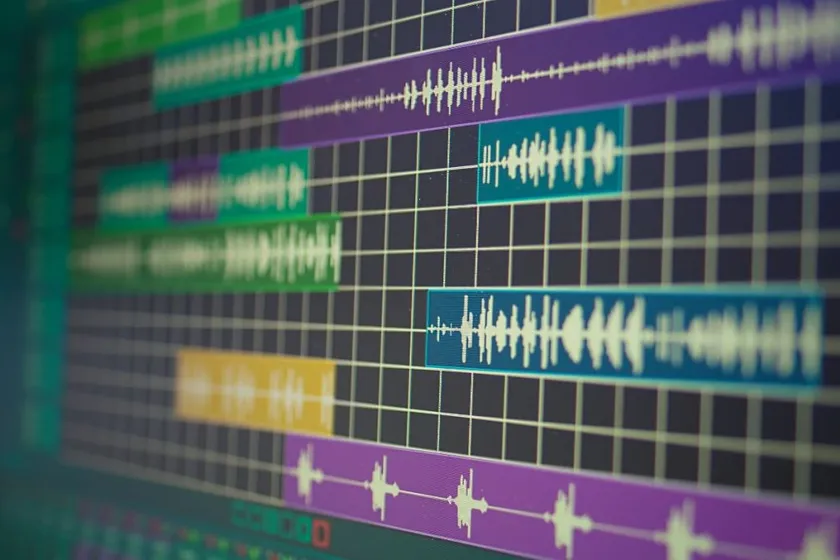
The catch is that this only works if you trust what you’re hearing. A song you sing into your laptop and play back through bad speakers will lie to you. So it helps to understand how your session is actually moving sound around — what’s hitting which channel, where the levels are sitting, what your mix bus is doing. Here’s a walkthrough of complete audio signal flow before you mix, and it applies just as much to your songwriting demos as to your final mix.
Write a Melody That Survives the Phone Speaker
“A good song should sound good with just one instrument and a voice. If it doesn’t work then, it won’t work with a thousand.” — widely attributed to John Lennon and to Paul Simon; (the exact source is disputed, but the principle is widely shared in songwriting circles)
Here’s something most songwriting posts skip.
Your song doesn’t get to choose where it gets heard. It will play on AirPods, on phone speakers, on car stereos, on laptop speakers in coffee shops. The melody you wrote in studio headphones has to survive all of those journeys.
Melodies built from tight, complex intervals tend to muddy on small speakers. The harmonics overlap. The notes start fighting each other. Melodies built on simpler, wider intervals stay distinct on almost any system.
This is part of why pentatonic-based melodies dominate streaming — they hold up across speakers. If you’ve never thought about your melodies through this lens, this guide on how the pentatonic scale built modern music is worth a read.
There’s a sister problem too. Even a great melody can sound muddy if the rest of the mix collapses around it. A lot of the time, that muddiness starts at the songwriting stage — too many instruments competing for the same frequency range, too many parts arranged in the same register. This breakdown of why mixes sound muddy is worth keeping in mind even while you’re writing.
A song worth releasing is a song that still sounds like itself on the bus.
Be Your Own Editor (Because Nobody Else Will Be)
“Sometimes you have to take an axe to a song. Cut the words you love. Cut the lines you’re proud of. The song doesn’t care.” — common songwriting workshop principle, often attributed to Tom Waits
When you’re a bedroom artist, you are also the co-writer. The mix engineer. The A&R. The brutal friend in the corner who tells you the second verse isn’t pulling its weight.
That last role is the one most bedroom writers skip.
The trick is distance. Leave the song for 24 hours before you call it finished. Borrow Andrea Stolpe's three principles (👇) when you come back to it;
- Does the music match the message? (prosody)
- Is the song moving forward at every moment? (momentum)
- Does every element earn its place? (restraint)
Sing the song to a friend. Send a voice memo to someone who won’t lie to you.
It also helps to hear the vocal the way it will actually sound on the record. A vocal sitting raw in a session and a vocal that’s been processed properly are two completely different things, and the second one tells you the truth. Here’s how to build a vocal chain so your reference take sounds close to the finished version.
Edit the song like it belongs to someone else. The version of you that wrote it isn’t the version of you that should finish it.
The Last Mile
“A song isn’t finished until it’s released.” — common adage among independent musicians
You wrote it. You sang it. You produced it.
The song is done in your DAW. But the song is not done in the world.
Between the version of the file sitting in your project folder and the version a stranger hears on Spotify, there’s one last step that decides whether the song you wrote actually translates: mastering.
It’s the difference between a song that sounds great on your monitors and a song that sounds great everywhere else.
👉 Here’s a walkthrough of the five steps that turn a finished mix into a release-ready master.
If you want to make sure your mix is ready before you hand it off, this guide on preparing a mix before mastering is the cleaner starting point.
The song you wrote deserves to sound like a record. The last mile is what makes it one.
Some talk before you releases
A song worth releasing is not a song that came out of a studio with a fifteen-person team. It’s a song that came out of the only room you had, the only voice you had, and the only setup you could afford, and still showed up on someone else’s headphones sounding like it belonged there.
Every great bedroom record was written by someone who is also the singer, the producer, the engineer, and the editor.
The room is small. The song doesn’t have to be.
The song you wrote deserves a real ending.
Remasterify is here when you’re ready for it.